Co-Extrusion Technology Now Standard in Over 60% of New WPC Wall Panels
The WPC industry is undergoing a fundamental shift in 2026. Co-extrusion technology — once considered a premium enhancement for high-end exterior projects — has become the baseline for new WPC wall panel products. The adoption rate now exceeds 60% of new product launches, reflecting both improved performance and reduced costs.
Why Single-Layer WPC Falls Short Outdoors
Traditional single-layer WPC wall panels face two persistent challenges in outdoor applications:
- UV degradation: Prolonged sun exposure causes surface fading, chalking, and micro-cracking.
- Moisture absorption: Wood fibers in the composite absorb humidity, leading to swelling, warping, and eventual cracking.
These issues typically manifest within 3 to 5 years of installation in challenging climates — coastal areas with high humidity, desert regions with intense UV, or locations with significant seasonal temperature swings.
How Co-Extrusion Solves the Problem
Co-extrusion addresses both limitations by bonding a protective ASA (acrylonitrile-styrene-acrylate) cap layer to a structural core during the manufacturing process. The ASA layer provides:
- UV resistance: Protects against fading and surface degradation.
- Moisture barrier: Prevents water absorption into the core.
- Color stability: Maintains appearance over extended service life.
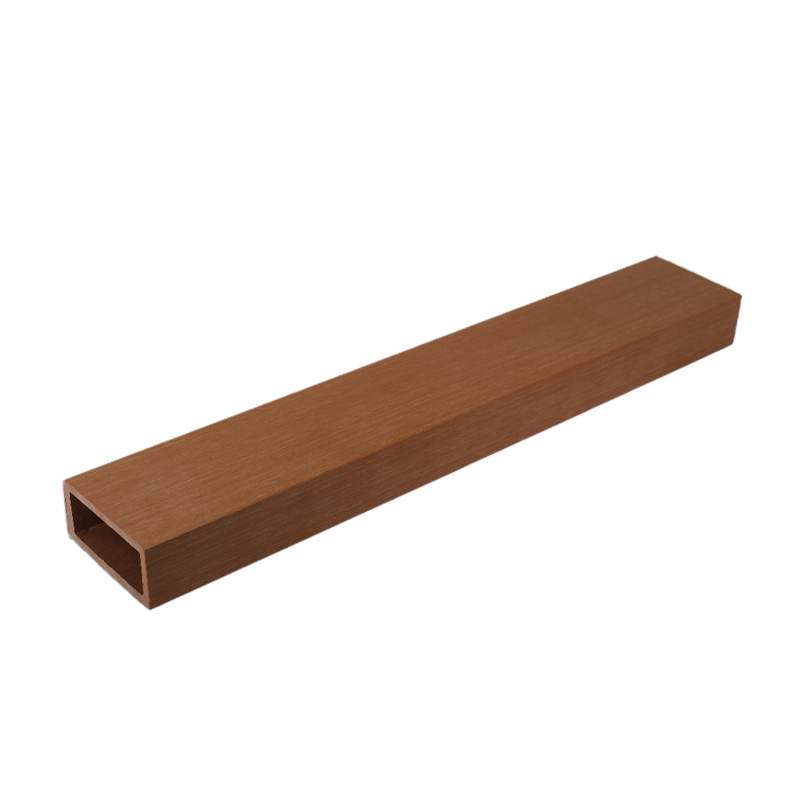
The structural core, typically made from recycled PVC and wood fiber, provides mechanical strength and dimensional stability.
From Premium to Standard: The Cost Factor
Two years ago, co-extruded WPC was primarily specified for high-end commercial projects due to higher production costs. In 2026, optimized tooling and material sourcing have reduced costs significantly, making co-extruded panels accessible to mid-size commercial and residential projects. This cost reduction, combined with demonstrable performance advantages, has accelerated industry-wide adoption.
🛡️ Necowood 360° Shield™ – Co-Extruded WPC Wall Panels
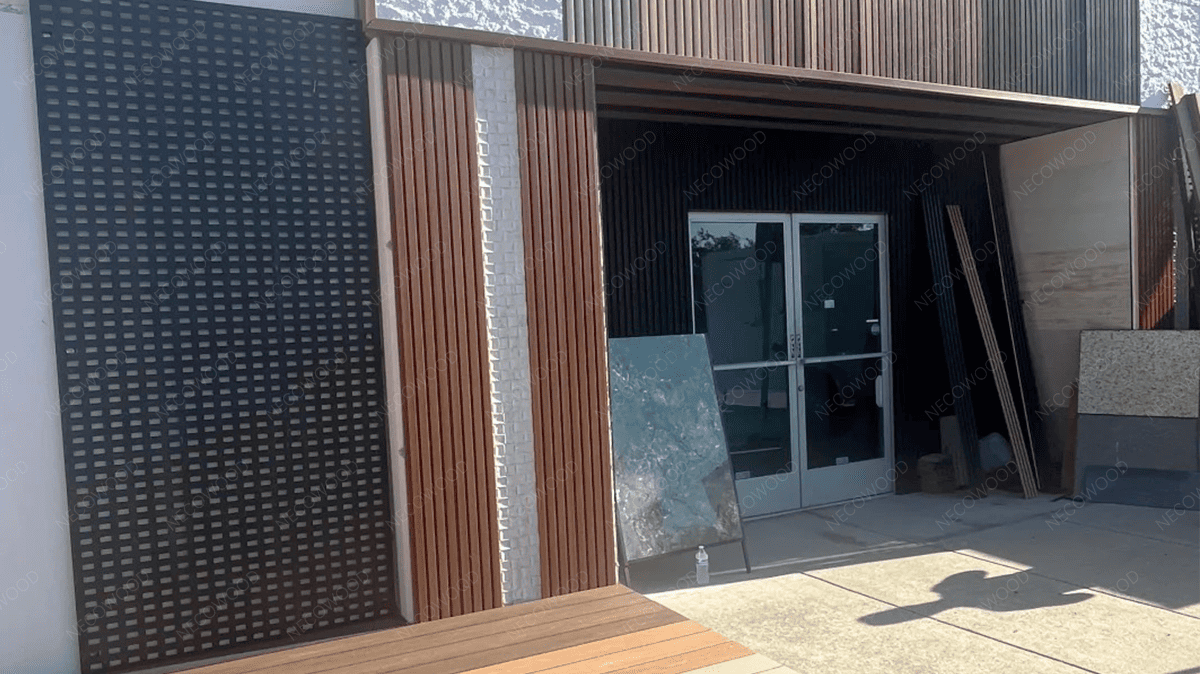
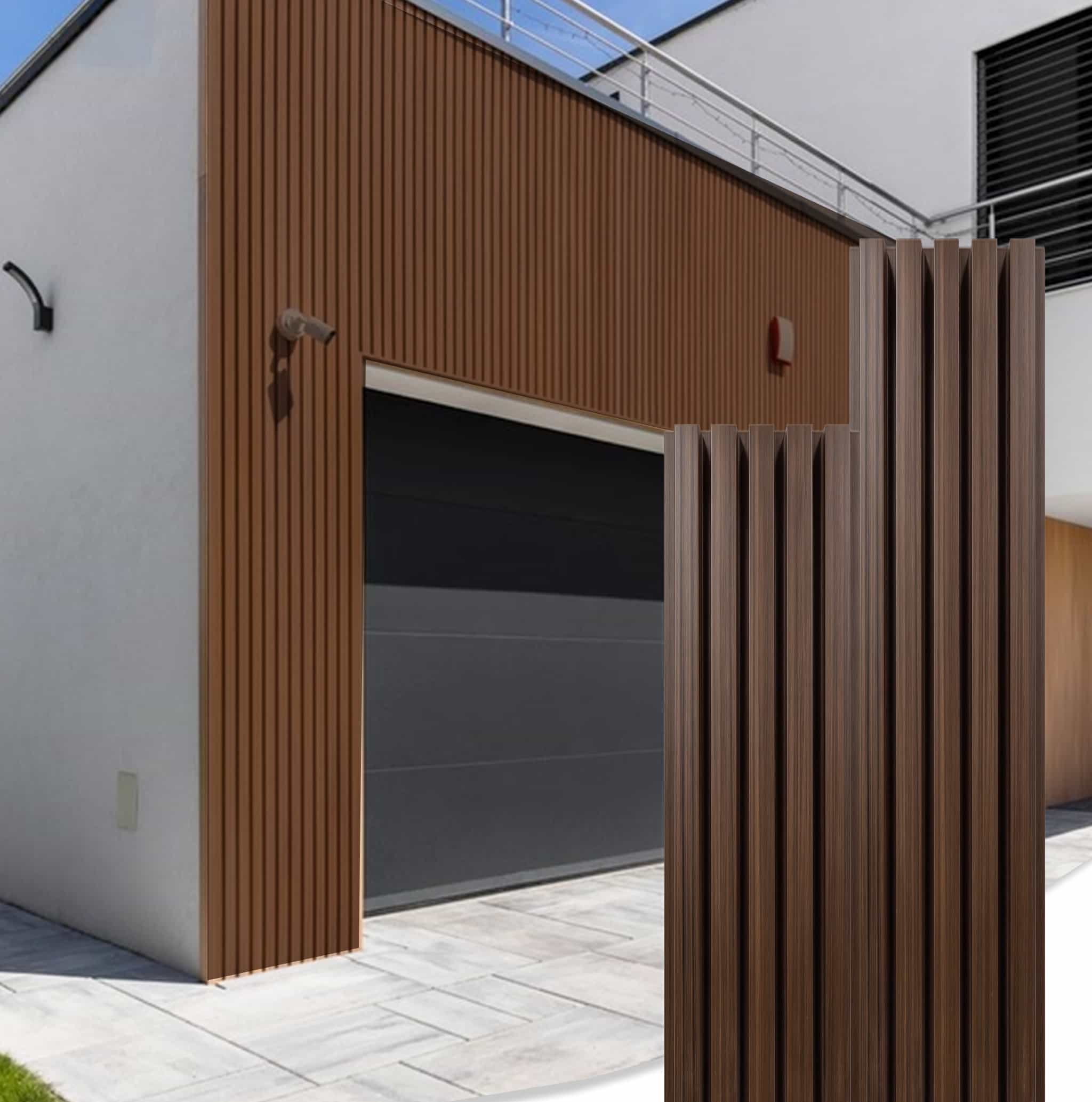
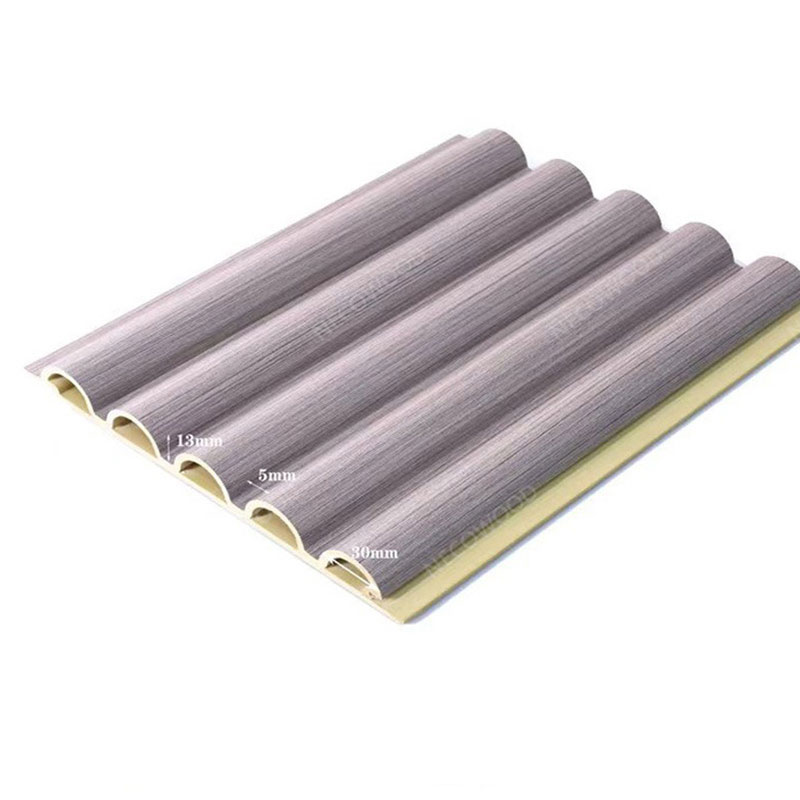
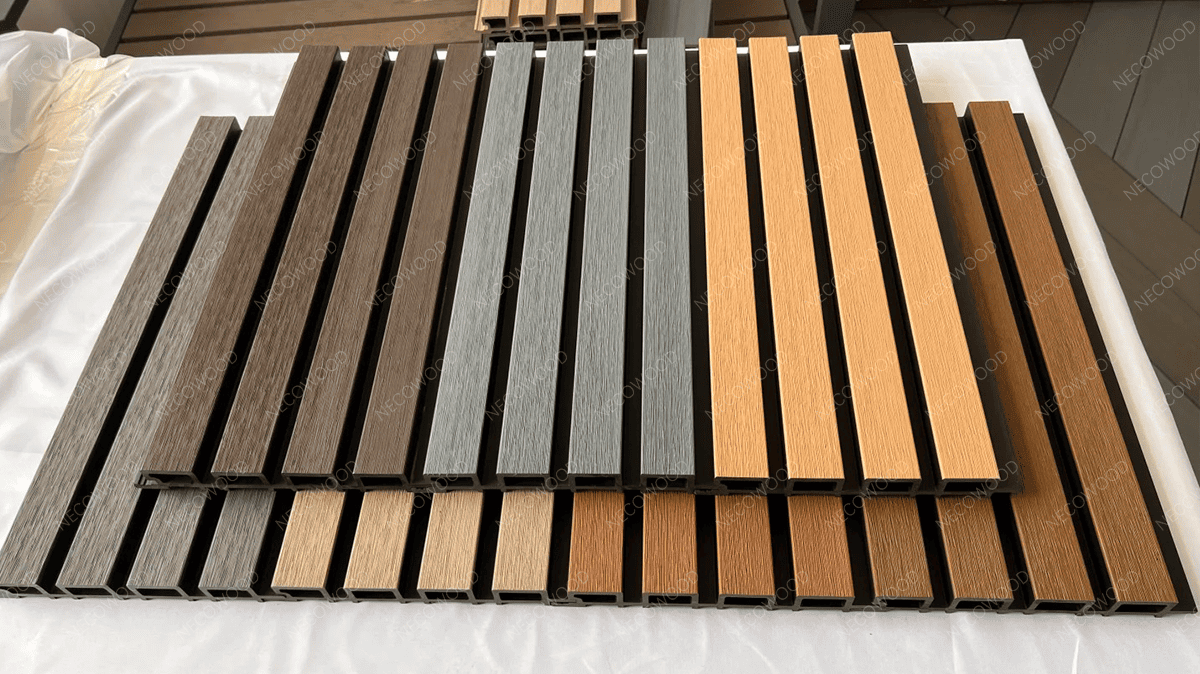
Necowood's 360° Shield™ series uses ASA/PVC co-extrusion technology to deliver verified performance for outdoor applications.
Available in multiple wood grain finishes. Suitable for exterior wall cladding, facades, and commercial building envelopes.
Market Impact and Industry Outlook
The shift to co-extrusion is not a short-term trend but a structural change in how WPC wall panels are manufactured for outdoor use. Industry data indicates that co-extruded WPC now accounts for the majority of new product development in the sector. Manufacturers that continue to offer single-layer WPC for outdoor applications are increasingly at a competitive disadvantage.
For specifiers and importers, the practical implication is clear: co-extruded WPC wall panels now represent the baseline for performance and durability in exterior applications.