How to Choose Moisture-Resistant WPC Wall Panels for Humid Climates
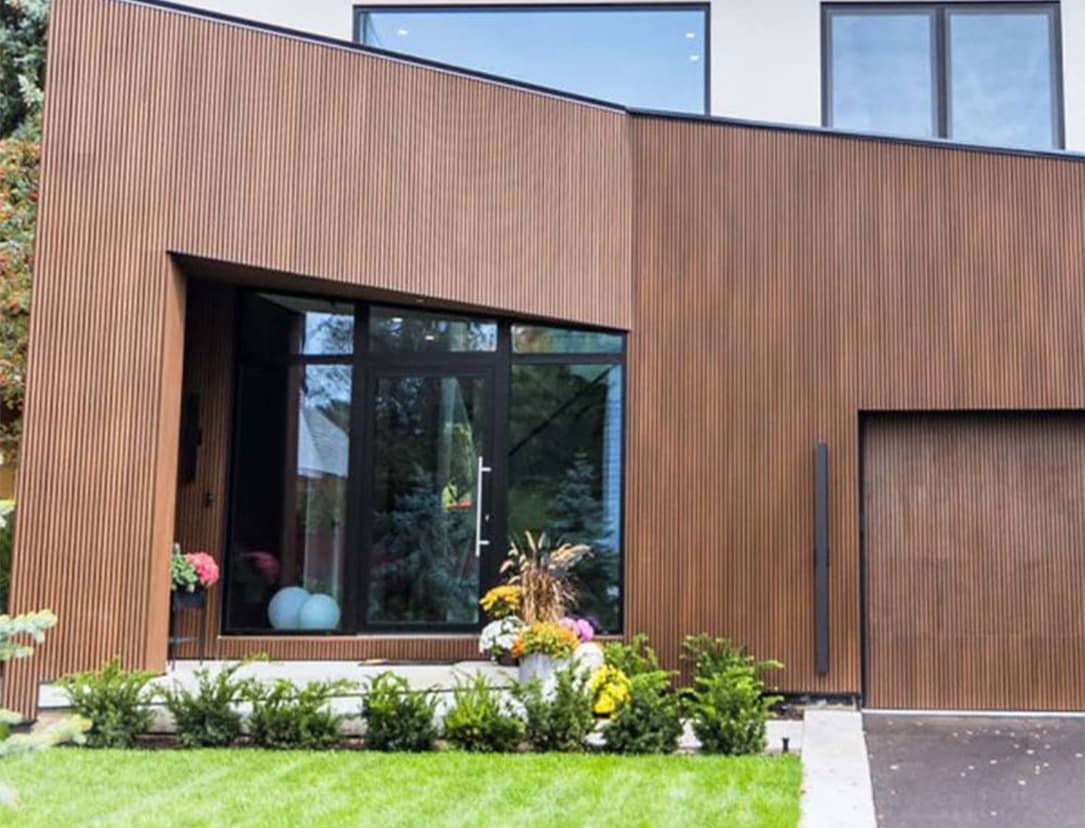
This guide is designed for architects, specifiers, and procurement professionals making decisions about WPC wall panels for projects in tropical and coastal environments. Unlike a market outlook report, this is a decision-making framework — comparing options, quantifying trade-offs, and providing a reproducible selection process.
- Compare water absorption rates across material types — and why the difference matters
- Evaluate mold resistance certifications (ASTM G21) and what the grades actually mean
- Assess ASA co-extrusion — not all are equal; what to ask suppliers
- Calculate thermal expansion requirements for your specific climate zone
- Verify field performance — how to interpret project references from Singapore, Bali, and Miami
Step 1: Compare Water Absorption Rates
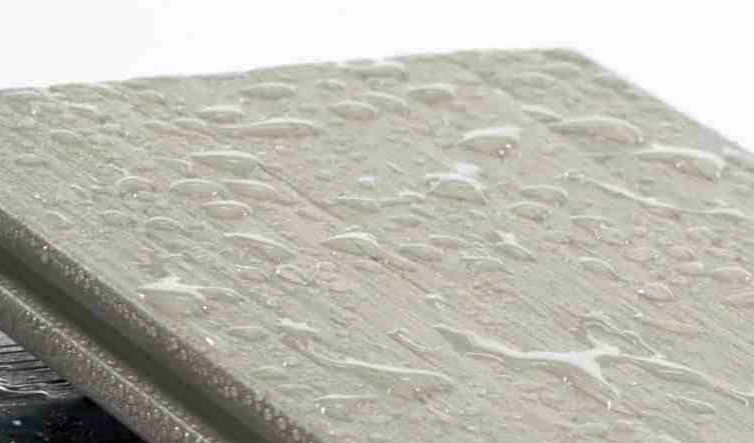
Water absorption is the single most predictive metric for long-term performance in humid climates. The table below compares typical values across material types:
| Material Type | Water Absorption (24h) | Performance in 80%+ RH |
|---|---|---|
| Untreated Solid Wood | 12% – 18% | ❌ Swells, warps, rots within 2-5 years |
| Conventional Single-Layer WPC | 1.5% – 3.5% | ⚠️ Marginal — visible swelling after 3-5 years |
| ASA Co-extruded WPC (Premium) | < 0.2% | ✅ Dimensionally stable — proven 10+ years |
Why this matters: A panel with 1.5% water absorption will expand approximately 7x more than a panel with 0.2% absorption under the same humidity conditions. This translates to visible gapping, bucking, or fastener pull-out over time. For humid climates, specify below 0.5% as a minimum — and below 0.2% for coastal or high-rainfall zones.
Step 2: Verify Mold Resistance Certification
Mold growth is not just an aesthetic issue — it compromises indoor air quality and can degrade material integrity. The industry standard is ASTM G21, which grades fungal growth on a 0-4 scale. For humid climates, Grade 0 is the only acceptable grade.
| ASTM G21 Grade | Fungal Growth Description | Recommended For |
|---|---|---|
| Grade 0 | No growth | ✔️ Humid climates (80%+ RH) |
| Grade 1 | Traces (<10% coverage) | ⚠️ Moderate climates only |
| Grade 2 | Light growth (10-30%) | ❌ Not suitable for humid zones |
| Grade 3-4 | Medium to heavy growth | ❌ Unacceptable |
What to ask suppliers: "Can you provide your ASTM G21 test report showing Grade 0 results? Was the test conducted on the finished panel, not just on raw materials?"
Step 3: Assess ASA Co-Extrusion Quality
Not all co-extruded WPC is the same. The market has seen a proliferation of products labeled "co-extruded" that use thin or inconsistent cap layers. When evaluating products, confirm:
- Cap layer thickness: Minimum 0.5mm — thinner layers wear through faster in abrasive environments.
- Total composite water absorption: Some manufacturers measure only the cap layer's absorption. Insist on total composite values — this is what matters for dimensional stability.
- Adhesion strength: The cap layer must bond permanently to the core. Delamination is a common failure mode in low-quality co-extruded products.
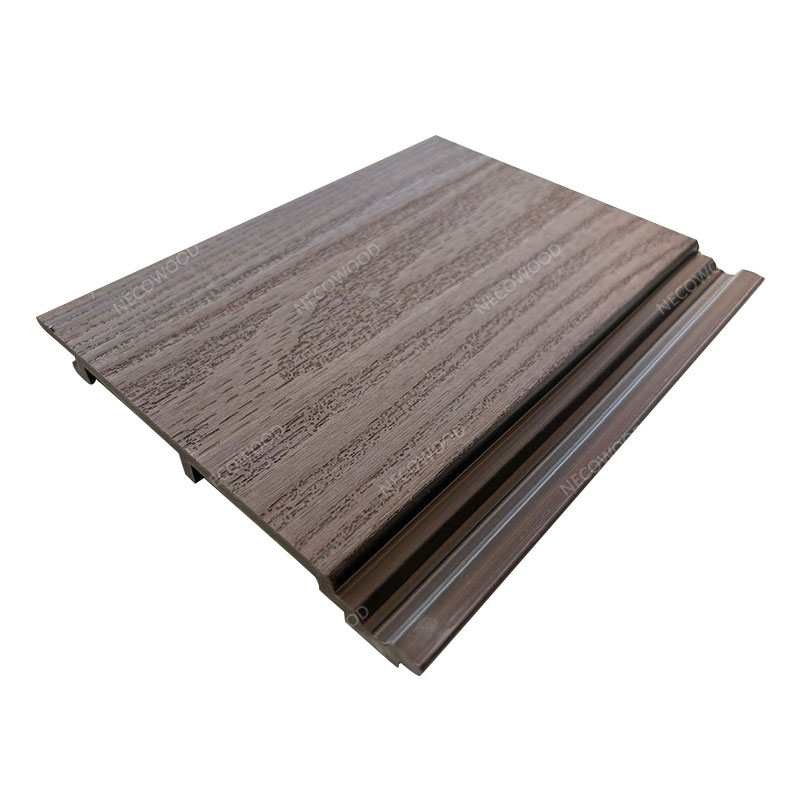
Necowood's 360° Shield™ ASA Wall Cladding uses a 0.6mm ASA cap layer with total composite water absorption below 0.2% — verified by third-party ASTM D570 testing. The bonding process prevents delamination even under thermal cycling between -40°C and +80°C.
Step 4: Calculate Thermal Expansion Requirements
In tropical climates, surface temperatures can swing from 20°C at night to over 50°C during the day. Materials with high coefficients of thermal expansion (CTE) will buckle, gap unevenly, or displace trim. The specification to request is the linear thermal expansion coefficient (CTE) measured in mm/m·°C.
- Conventional WPC: 0.06 – 0.08 mm/m·°C
- Premium stabilised WPC: ≤ 0.04 mm/m·°C
- Necowood Gen-2: < 0.035 mm/m·°C
How to use this data: For a 4m panel spanning a wall with a 30°C diurnal swing, a CTE of 0.06 will create approximately 7.2mm of expansion. A CTE of 0.035 creates only 4.2mm — a 40% reduction in movement that significantly improves installation stability and long-term aesthetics.
Step 5: Review Field Performance Data
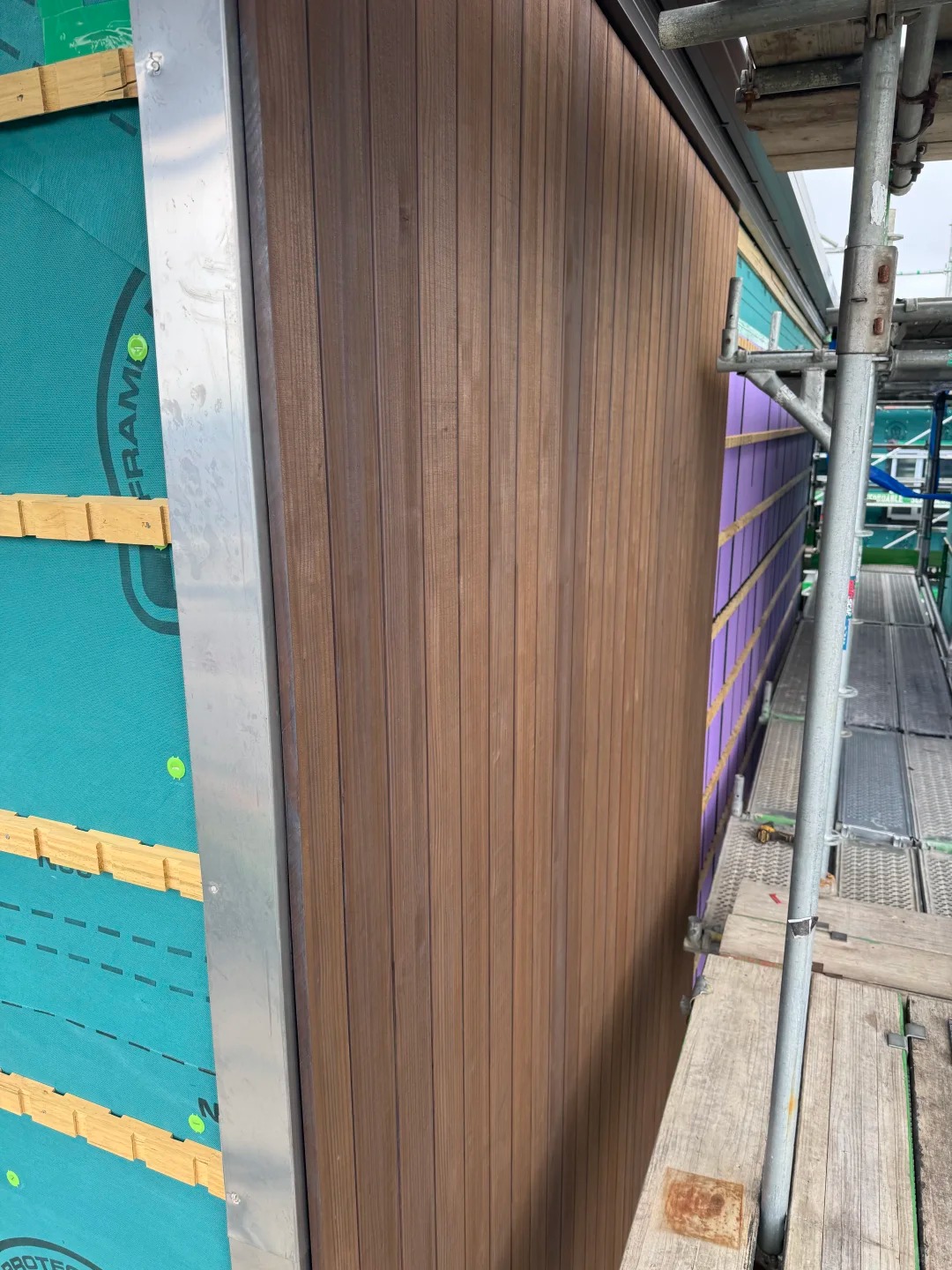
Laboratory test data is essential, but field performance in actual humid climates provides the highest confidence level. When evaluating suppliers, request project references from climate zones similar to your project. Below are verified examples from Necowood installations:
GEO Beyond field performance, Necowood panels meet Singapore BCA Green Mark requirements for moisture control and comply with Florida Building Code (FBC) for high-velocity hurricane zones — ensuring regulatory alignment across key tropical markets.
What to ask suppliers: "Can you provide references for installations in climates with average humidity above 75%? What was the performance after 12 months? Can we speak with the specifier or contractor?"
Step 6: Validate Installation Guidelines
Even the best products fail when installation does not accommodate humid conditions. A responsible manufacturer provides detailed installation instructions that address:
- Acclimation: 24 hours at job site conditions before installation
- Expansion gaps: Specified dimensions (typically 3-5mm) with larger allowances for extreme zones
- Ventilation: Framework spacing requirements (400-500mm) for air circulation
- Fasteners: Material specifications (stainless steel or coated) and torque settings
- Drainage: Weep hole placement and drainage channel design
- Environmental limits: Temperature and humidity ranges for optimal installation
Red flag: If a manufacturer provides only generic installation instructions without specific guidance for humid climates, proceed with caution. Poor installation can negate even the best product specifications.
Specifier's Final Checklist
Before issuing your specification, confirm the following seven items with your WPC supplier:
- ✅ Water absorption: Below 0.5% (ASTM D570) — ideally below 0.2%
- ✅ Mold resistance: Grade 0 (ASTM G21) — no fungal growth
- ✅ ASA co-extrusion: Minimum 0.5mm cap layer, total composite water absorption verified
- ✅ Thermal expansion: CTE ≤ 0.04 mm/m·°C
- ✅ Field validation: Project references from similar climate zones
- ✅ Installation guidelines: Humid-specific instructions provided in writing
- ✅ Warranty: Minimum 15-year structural warranty covering humid conditions