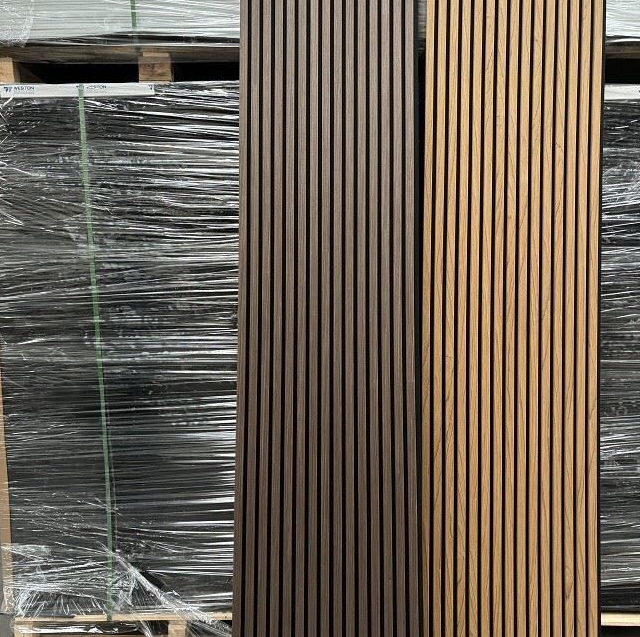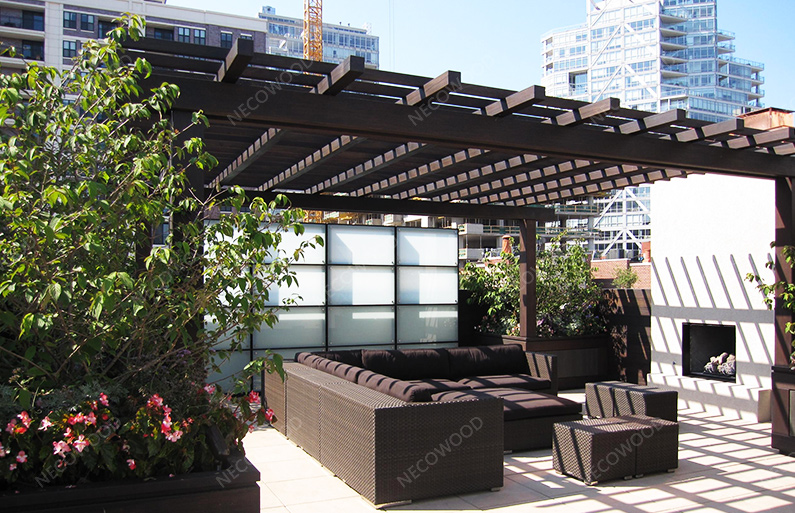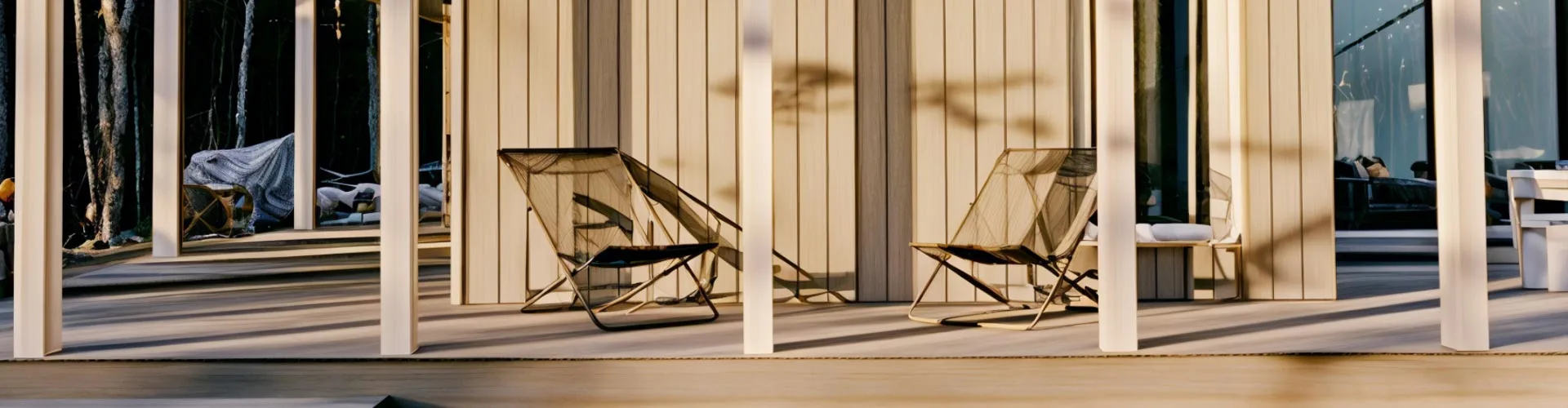
Indoor vs Outdoor WPC Wall Panels: Performance, Material Science, and Selection Guide
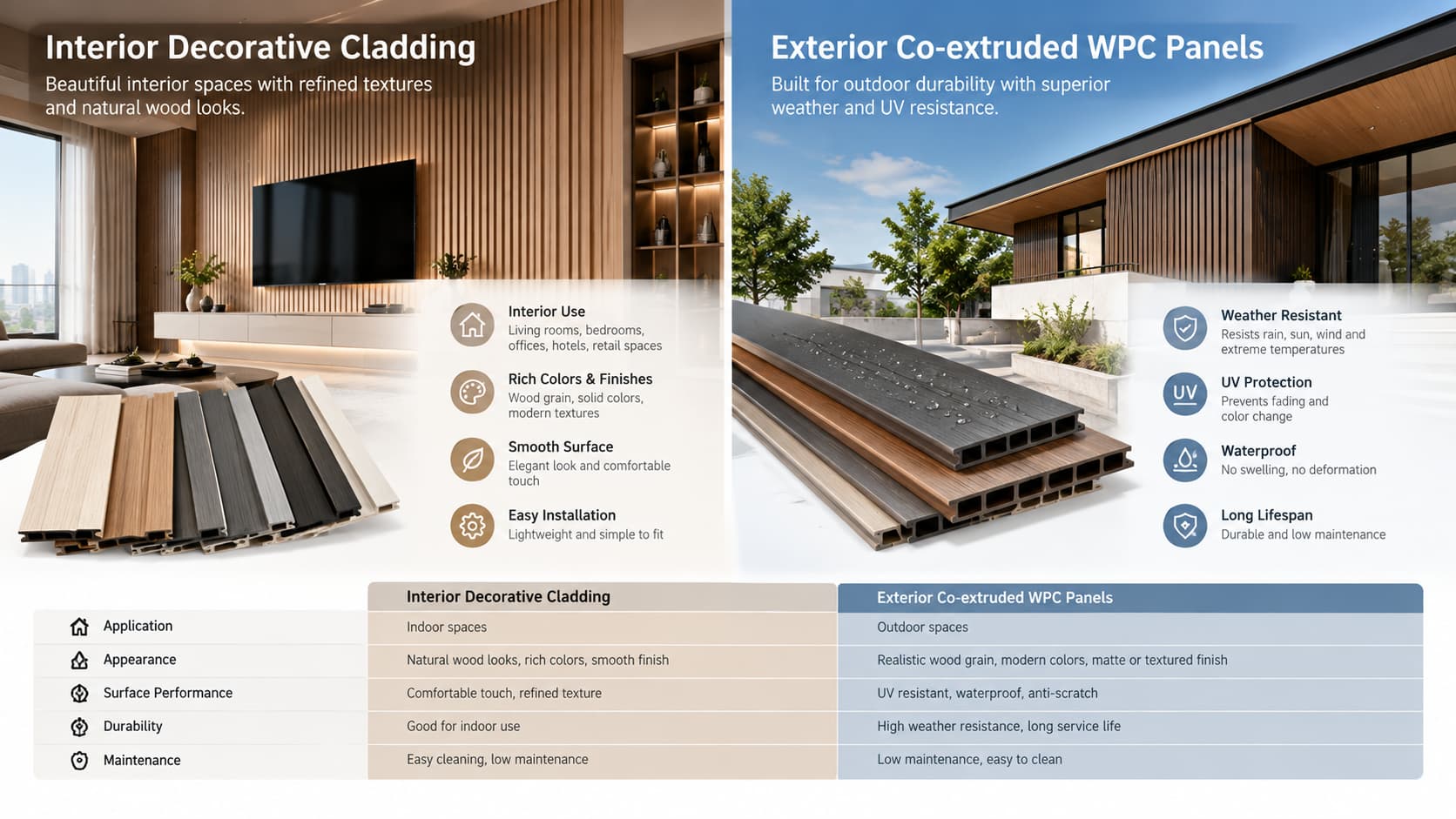
Wood-Plastic Composite (WPC) wall panels can be used outdoors only when the manufacturer approves that exact product for exterior exposure. WPC stands for Wood Plastic Composite. The name describes the core raw material composition, not the approved application environment. While indoor decorative panels and outdoor structural panels may look similar on the surface, they perform very differently in real-world environments.
1. Indoor vs Outdoor WPC Panels: Performance Comparison
Indoor panels focus primarily on aesthetics, surface finishes, and straightforward installation. Outdoor panels must endure solar radiation, driving rain, and substantial temperature fluctuations. Below are the key performance differences:
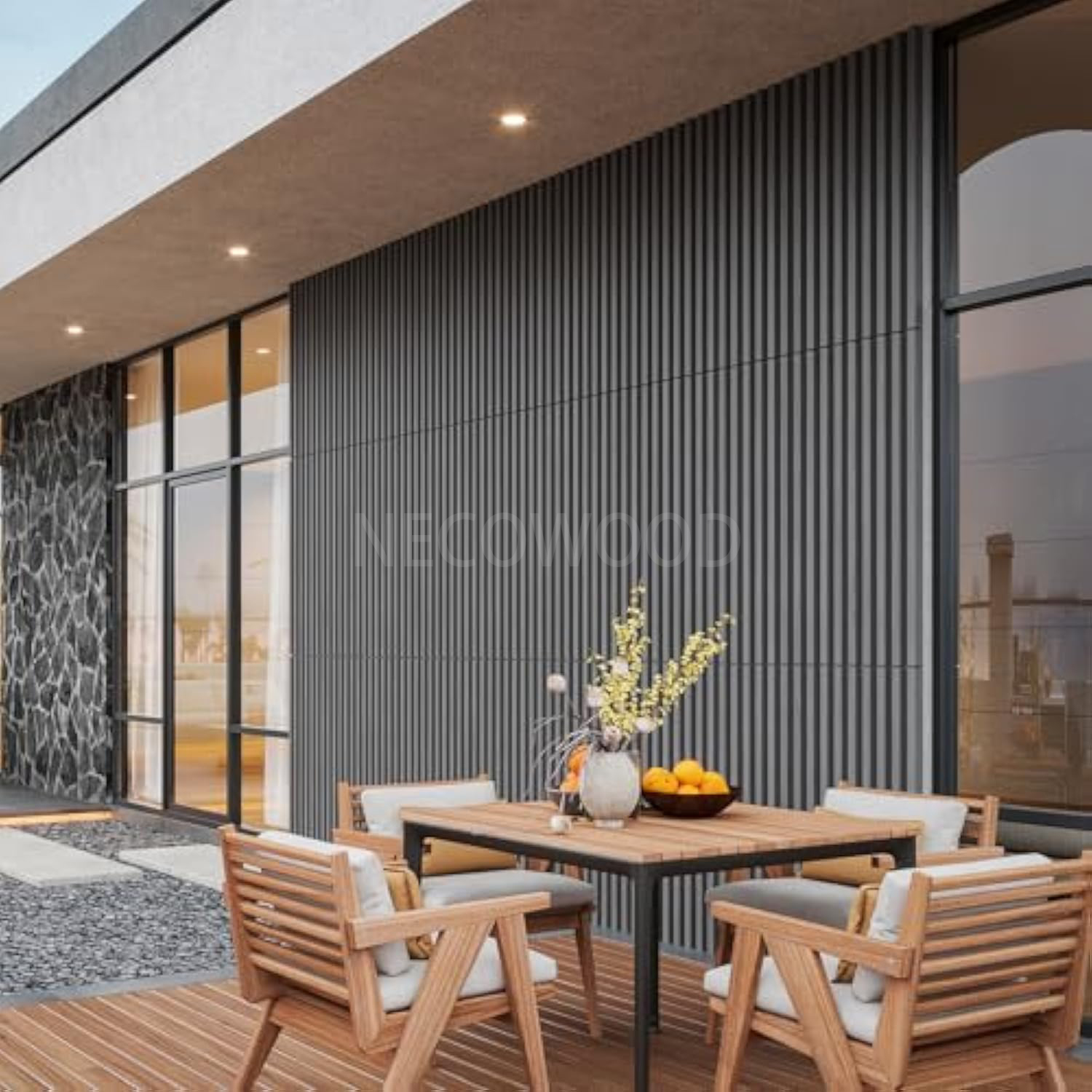
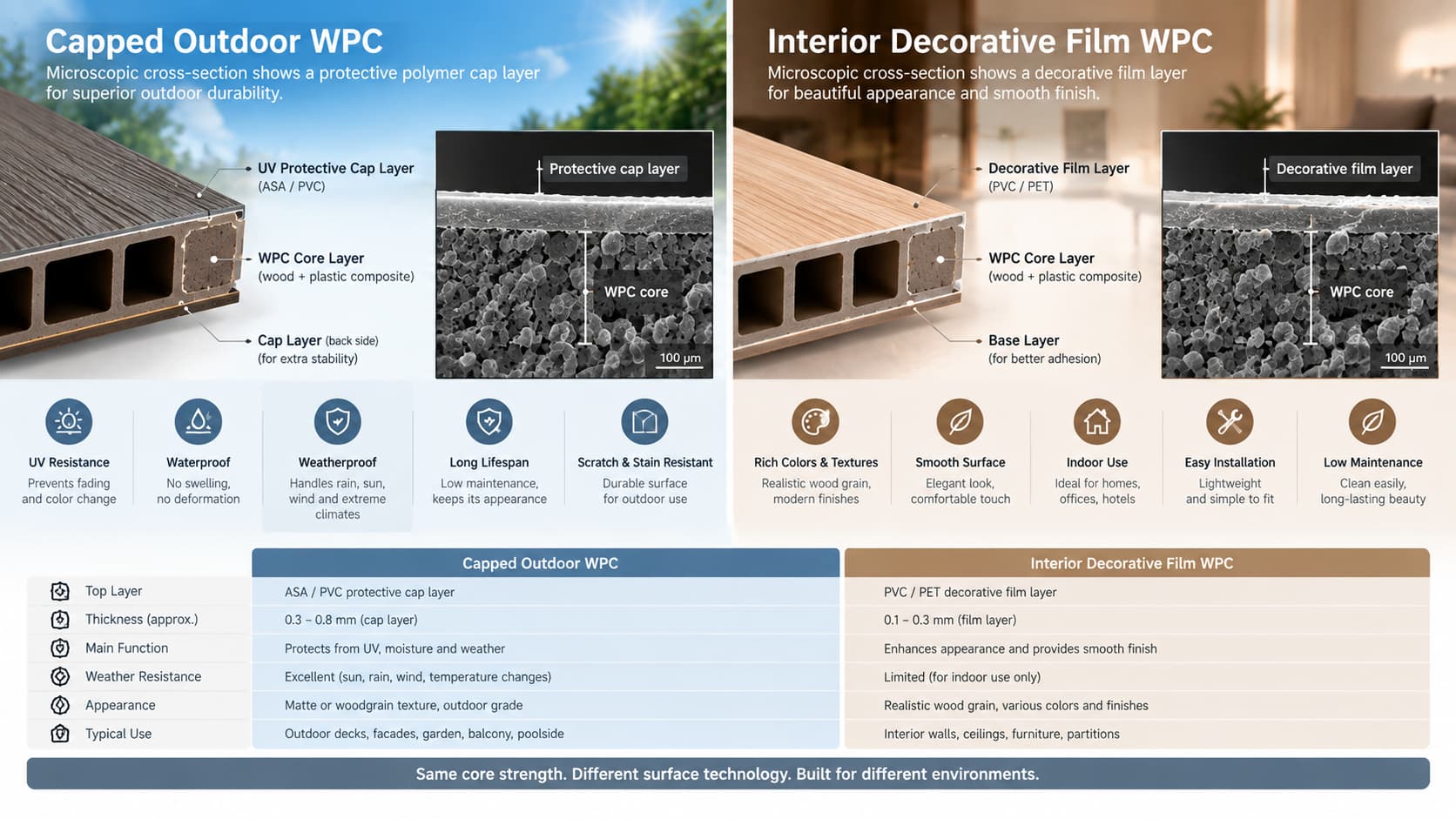
- UV and Weather Resistance: Outdoor panels must resist ultraviolet light and fading. A standard performance benchmark is 1,000 hours or more of QUV accelerated weathering testing (ISO 4892 or ASTM G154 standards). Outdoor ranges, such as Necowood ASA co-extruded series, feature an armor protective layer. Indoor panels rarely carry this coating; direct sunlight can fade them within months.
- Water Resistance: Outdoor panels handle rain and continuous moisture cycling, backed by structural profiles that allow airflow and drainage. Indoor panels manage ambient humidity and light splashes only. Water can easily enter through joints and cut edges, meaning standard indoor panels should never be used inside shower stalls or constantly wet walls.
- Thermal Movement: All WPC panels expand and contract with temperature shifts. Outdoor panels encounter wider thermal swings, requiring larger expansion gaps and flexible subframes. Indoor allowances are smaller—typically 3–5 mm per linear meter (always verify with exact product specification sheets).
- Impact and Surface Durability: Outdoor panels utilize tough surfaces designed for weather exposure and physical impact. Indoor panels are classified into two grades: residential grade for low-traffic rooms, and commercial grade for areas exposed to carts, luggage, and frequent contact. Thin residential panels can easily scratch in busy commercial corridors.
Performance Summary Table
| Performance Point | Necowood Indoor WPC Panels | Necowood Outdoor WPC Panels |
|---|---|---|
| UV Resistance | Usually limited (Indirect light) | Required (1,000+ hr QUV) |
| Water Exposure | Humidity & light splashes | Rain & cyclic wetting |
| Thermal Gap | Small (approx. 3–5 mm/m) | Large, flexible subframe |
| Surface Strength | Residential / Commercial grade | Heavy-duty weather armor |
| Main Risk | Selecting by looks alone | Using indoor panel outside |
2. Material Differences Between Indoor and Outdoor Panels
While both product categories are wood plastic composites, the material blend and outer surface engineering are tailored specifically for their intended environment.
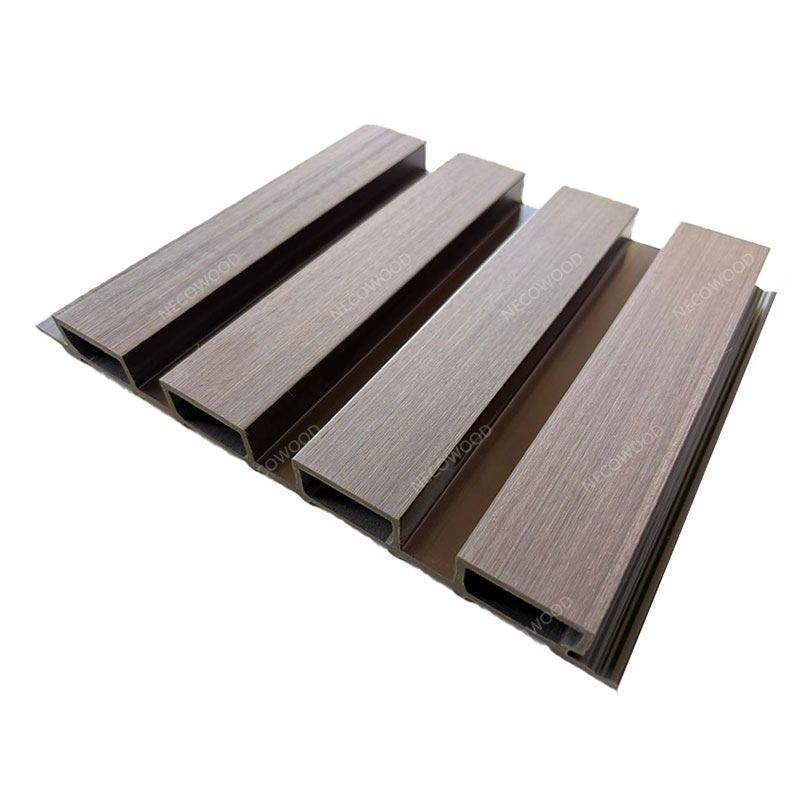
Core and Surface: Outdoor panels typically feature a co-extruded cap over the composite core (such as Necowood's ASA protective armor layer). This cap prevents UV degradation and water penetration. Indoor panels use decorative PVC laminates, printed finishes, or matte coatings designed for interior visual appeal rather than weatherability.
WPC Compared With Other Wall Finish Materials
Specifiers often evaluate WPC against alternative finishes. WPC bridges the gap between natural timber and pure polymer panels:
| Material Type | Core Strengths | Weakness / Trade-off |
|---|---|---|
| Necowood WPC | Authentic wood look, low upkeep, eco-friendly | Higher initial cost than PVC |
| Hollow PVC | Low cost, lightweight, easy cutting | Brittle aesthetic, lower fire rating |
| Solid Timber | Warm, natural, authentic feel | High maintenance, rot risk |
| Ceramic Tile | Fully waterproof, hard surface | Cold feel, heavy weight, slow fit |
Note for European buyers: Necowood products strictly comply with EUDR (EU Deforestation Regulation) requirements, utilizing 100% traceable, sustainably sourced wood fibers.
3. How to Choose Indoor WPC Wall Panels
Once you confirm a panel model is certified for indoor application, select the precise specification based on room environment, construction, dimensions, and ongoing maintenance.
Step 1: Match the Panel to the Room Environment
| Indoor Environment | Typical Locations | Recommended Approach |
|---|---|---|
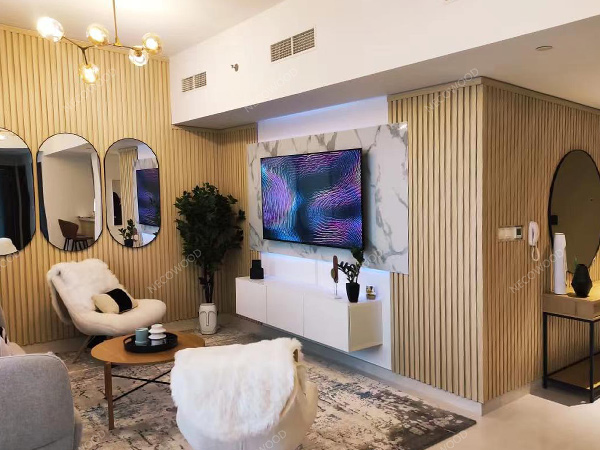
| Dry Residential | Living rooms, bedrooms, hallways | Standard Indoor Necowood WPC |
| Dry Commercial | Offices, retail shops, hotel lobbies | Commercial-Grade Heavy-Duty WPC |
| Humid / Ventilated | Laundries, basements, utility rooms | Moisture-Resistant Indoor WPC |
| Splash-Prone Areas | Kitchen walls, powder room dry areas | Dry-Zone Moisture-Approved System |
| Direct Wet Areas | Shower stall interiors | Tested Wet-Area Wall System Only |
| Heat-Exposed Areas | Near heaters, non-flame kitchen zones | Approved Heat-Resistant Finish |
For kitchen applications, keep standard interior WPC panels away from the following spots:
- Directly behind gas burner flames.
- Beside unprotected, hot oven surfaces.
- Against hot exhaust flues or heat pipes.
- Where heavy grease accumulation enters unsealed joints.
- Where local building codes mandate non-combustible A1-rated finishes.
Step 2: Ask the Right Questions First
- Is the room dry, humid, or subject to direct splashes?
- Will the panel be installed near a stove or heating source?
- Will occupants, luggage, or furniture frequently bump the surface?
- Is acoustic control required for the space?
- How frequently will the wall be cleaned, and with what cleaning agents?
Step 3: Check Material Quality and Dimensions
Always request a physical sample. Inspect the surface texture, cut edges, odor, joint interlock tightness, and color tone under the actual project lighting. Warm and cool ambient light significantly change wood-grain tones. Confirm width, length, overall thickness, and groove spacing before finalizing project drawings. Ensure matching trims (Matching Trims) are available before placing orders.
Indoor Purchasing Checklist
- Approved for intended indoor application
- Suitable for specific room environmental conditions (dry/humid/heat)
- Correct panel dimensions and joint interlock design
- Verified surface cap and core composite construction
- Manufacturer cleaning and maintenance guidance provided
- Approved installation and fixing methods confirmed
- Matching trim profiles and edge trims ordered
- Warranty coverage verified for planned usage
Installation and Care Basics
Install wall panels on a clean, dry, stable, and flat wall surface. Fix any underlying dampness, mold, or masonry cracks first. In my experience, covering a damp wall with panels never solves the underlying issue. Leave the recommended thermal expansion gaps during installation. Keep electrical sockets, switches, and vents accessible. Clean with a soft cloth and mild non-abrasive cleaner, avoiding strong solvents. Always retain a few spare panels from the original delivery batch, as subtle color variations can occur between production runs.
4. Frequently Asked Questions (FAQ)
No, unless the manufacturer explicitly approves that exact product model for exterior use. Indoor panels lack UV stabilizers and heavy-duty weather protection. Sunlight and rain can fade and warp them within a few months. Fully exposed walls require exterior-rated co-extruded panels.
Moisture-resistant WPC panels can be installed on non-shower bathroom walls with adequate ventilation. Standard panels should not go inside shower stalls where continuous water spray occurs, as water can seep through interlocks and cut edges.
Yes, on dining walls and decorative areas away from direct heat, open flames, and heavy grease. Standard panels should not replace specialized fire-resistant finishes directly behind cooktops.
No. A fluted profile mounted directly to a hard masonry wall yields a Noise Reduction Coefficient (NRC) below 0.1. Real acoustic absorption requires a certified soundproof system featuring acoustic PET felt or mineral wool backing.
Only if the manufacturer approves that exact model. A roof overhang does not protect cladding from wind-driven rain, humidity, or ambient UV rays. Semi-outdoor or exterior-rated panels are much safer for open-sided balconies.
Conclusion
Indoor and outdoor WPC panels differ fundamentally in UV resistance, moisture handling, thermal expansion allowances, and surface armor engineering. Choosing the wrong application environment is the single leading cause of premature panel failure. Always confirm the panel is certified for your specific location, inspect physical samples, and match the specifications to the room conditions.