



QR Code

Contact Us


Email

Address
Nantongbang Industrial Park, No. 80, Fumin Road, Yuanshanbei Village, Changping Town, Dongguan City, Guangdong, China

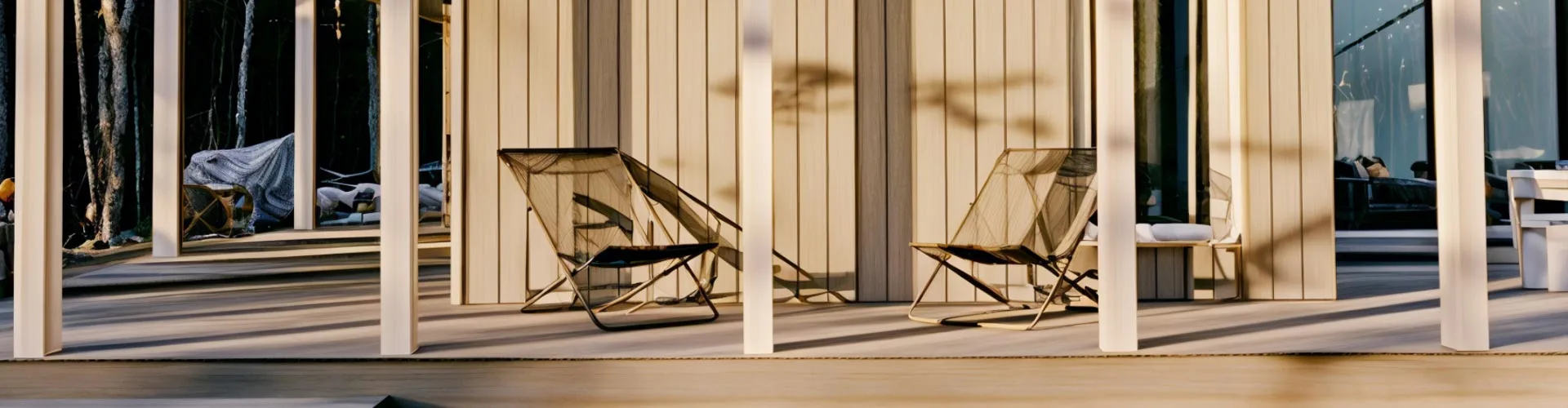
Water absorption below 0.5% · Density 1.2–1.4 g/cm³ · Class B1 fire rating · 15+ year service life — for walls, ceilings, partitions, and furniture.
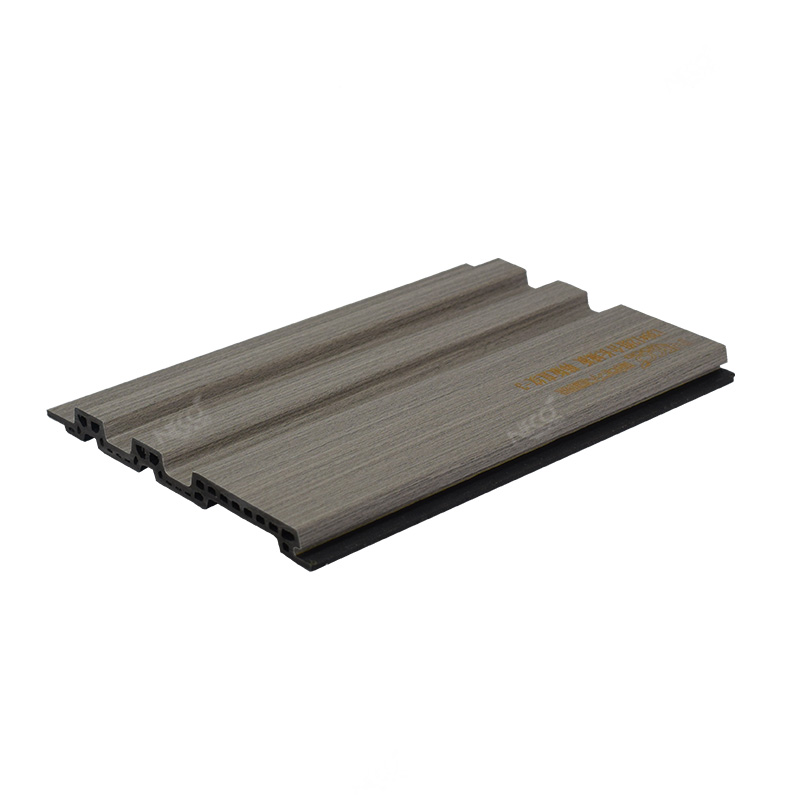
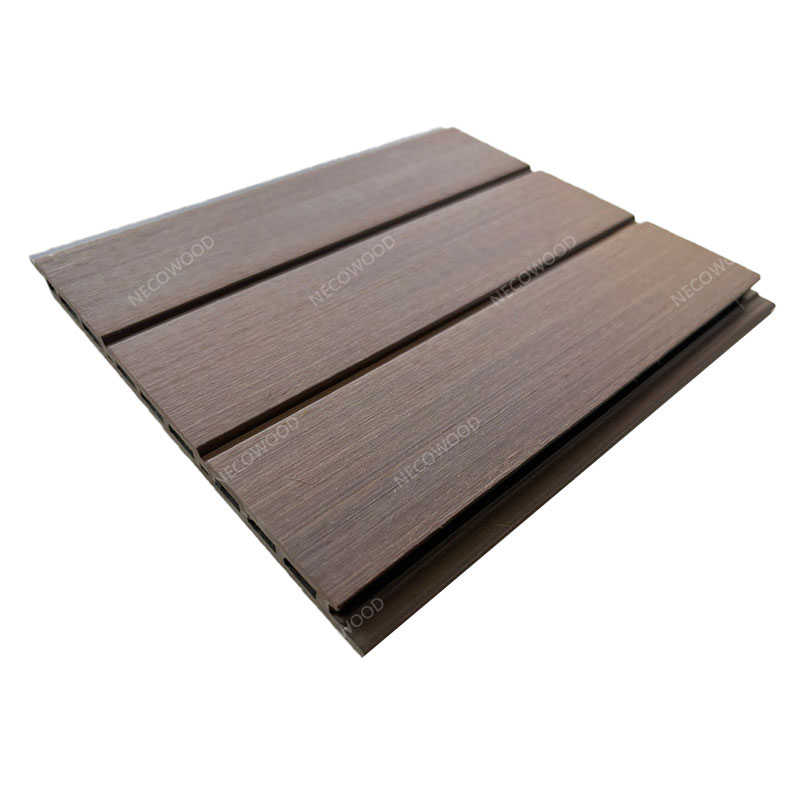
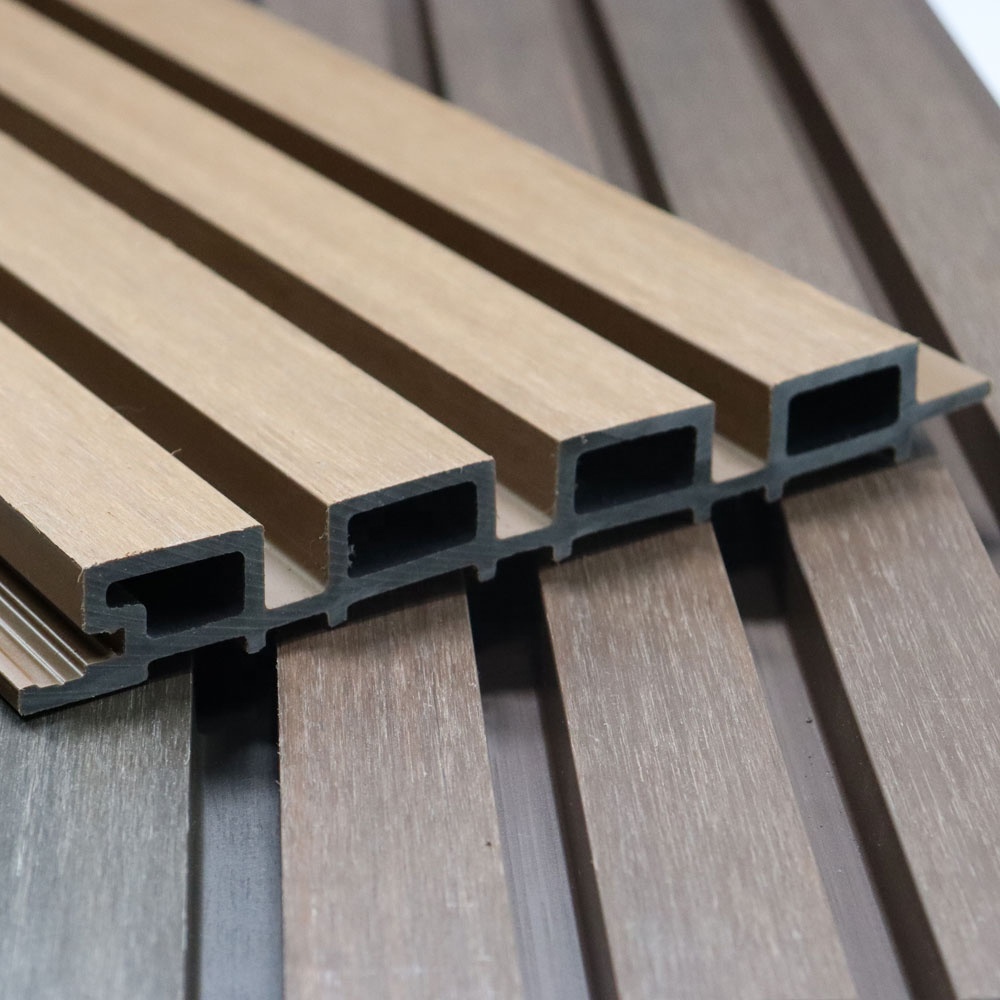
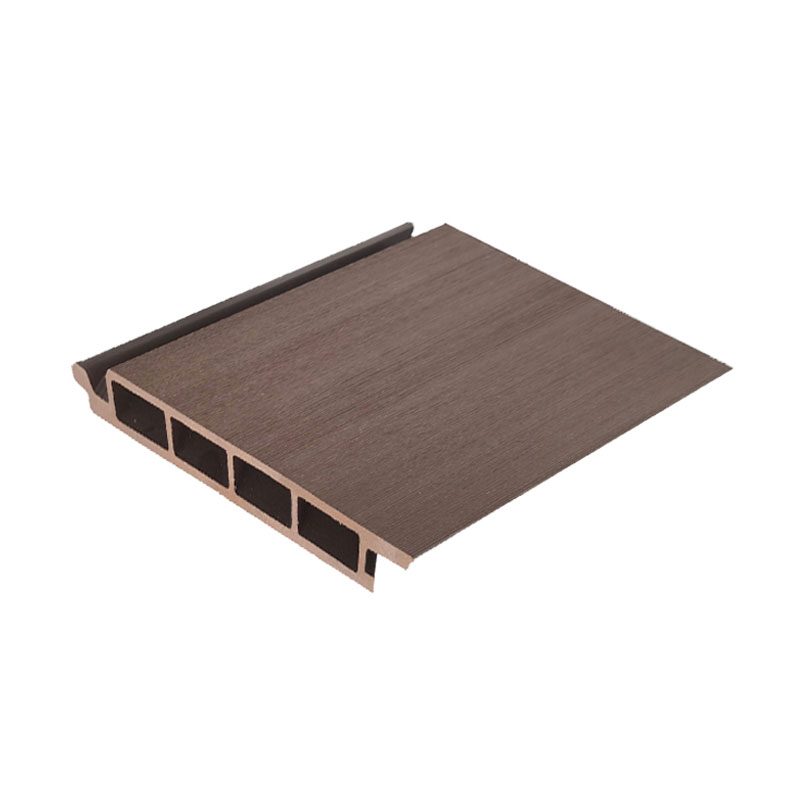
WPC composite board combines wood fibre (50–60%) and polymer (40–50%) to deliver a waterproof, termite-resistant, low-maintenance alternative to natural wood. It absorbs below 0.5% water by weight (ASTM D570), has a density of 1.2–1.4 g/cm³, achieves Class B1 fire rating (EN 13501-1), and needs no painting or sealing over a 15+ year service life. Applications include offices, hotels, restaurants, salons, retail stores, and reception counters.
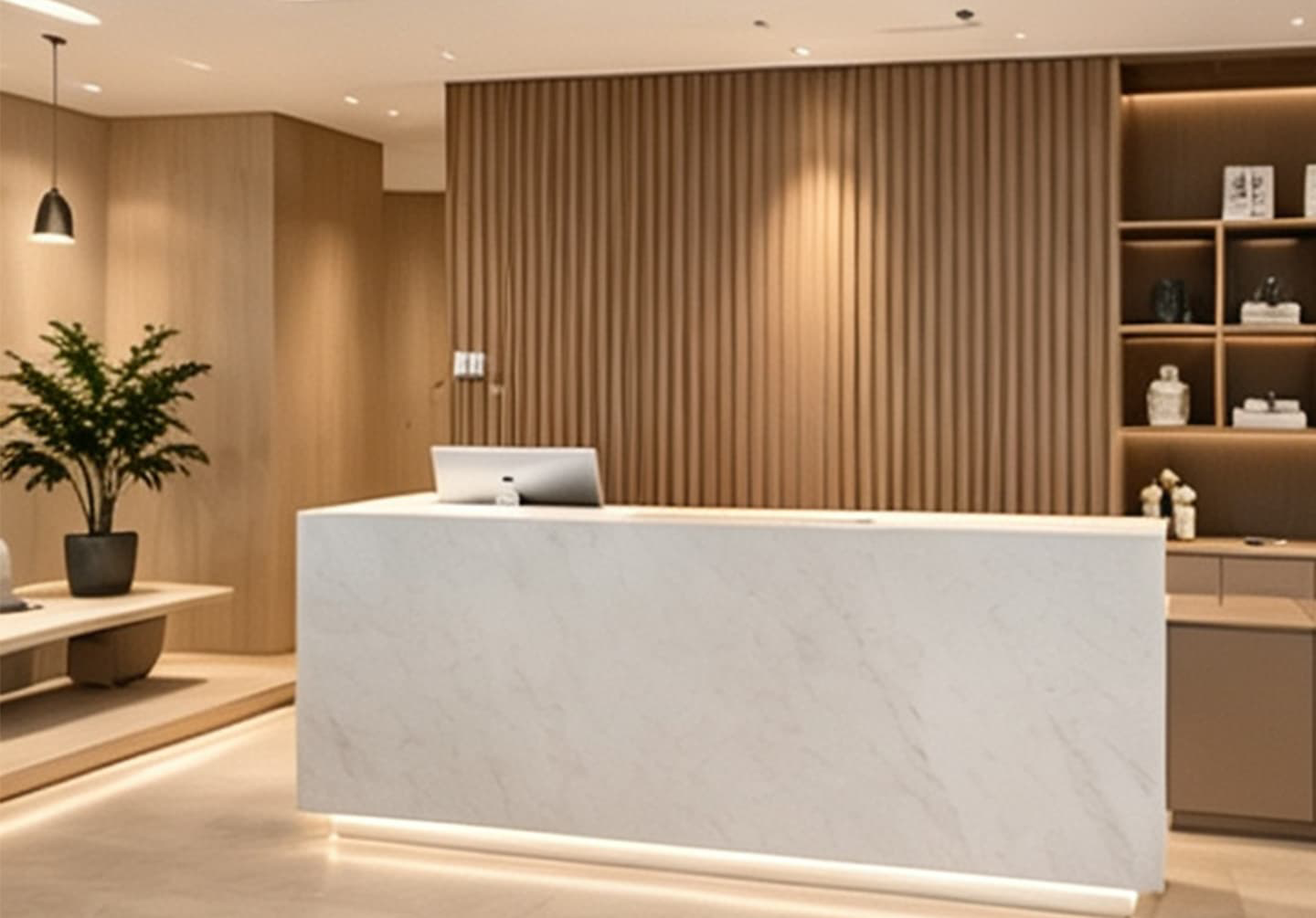
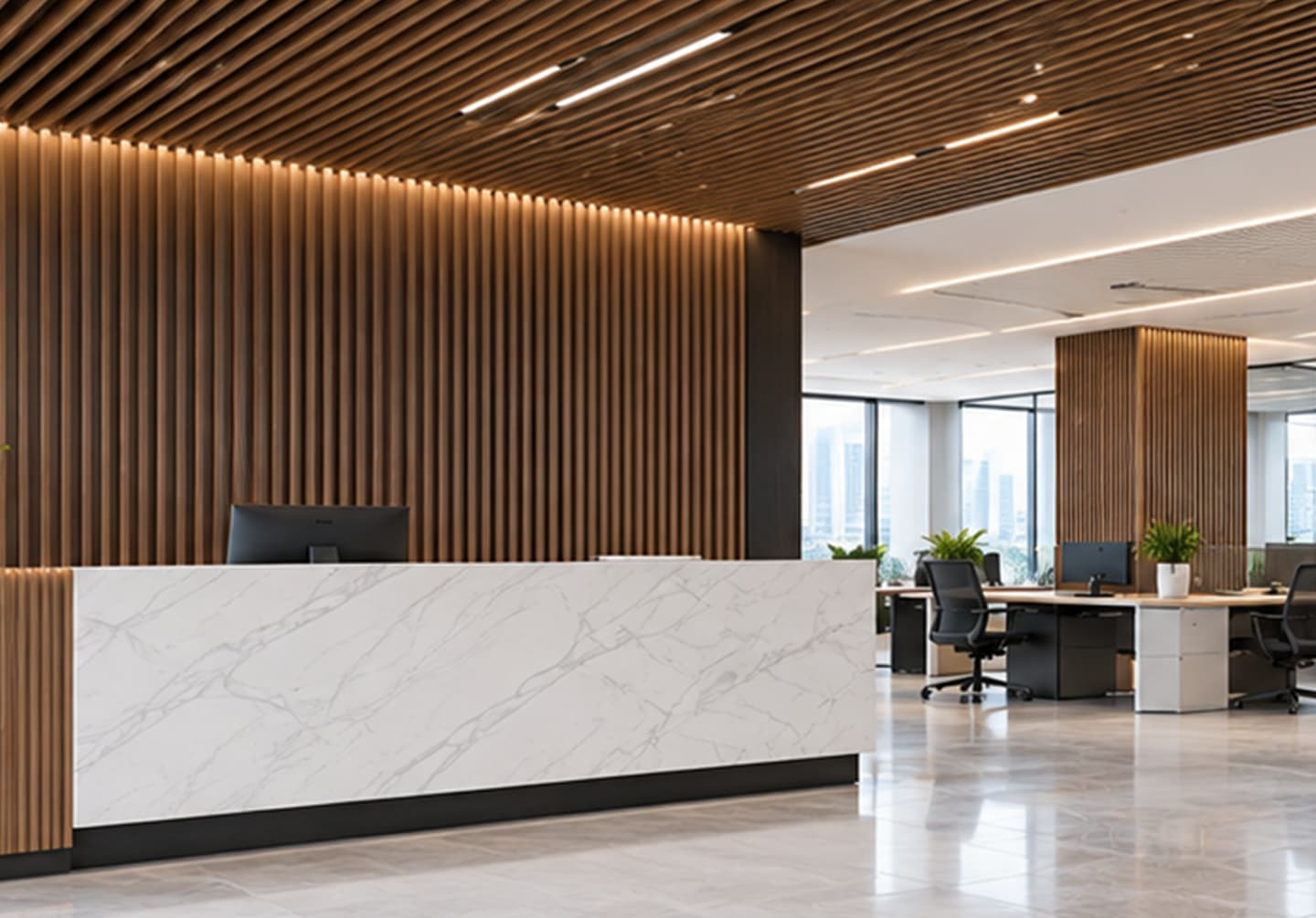
Composite boards have become a practical choice for residential and commercial interiors. They offer a balance of durability, design flexibility, and low maintenance that traditional materials struggle to match.
Natural wood looks good, but it needs regular polishing, painting, sealing, and protection from moisture. Untreated wood absorbs 12–18% water by weight, according to ASTM D570 testing. WPC composite board absorbs below 0.5% — a 24–36x difference that directly affects how the material performs over time.
This guide explains what WPC composite board is, how it compares with wood, plywood, and MDF, where it can be used, and what to check when ordering. It is written for designers, contractors, builders, and property owners who need a material that performs as well as it looks.
The core advantage of WPC composite board is its composition. It is made from a blend of wood fibres (typically 50–60%) and polymers (typically 40–50%), plus small amounts of additives. This blend improves resistance to moisture damage, warping, cracking, and insect attack.
Water absorption: Below 0.5% by weight (ASTM D570)
Density: 1.2 – 1.4 g/cm³
Service life: 15+ years with routine cleaning
Maintenance: No painting, staining, or sealing required
Fire rating: Class B1 (EN 13501-1) available for commercial projects
Termite resistance: Not a food source for termites — no treatment required
However, not all composite boards are equal. Lower-quality boards may use higher wood content, lower-density polymers, or inconsistent mixing — which can lead to warping, surface wear, or delamination. That is why density, thickness, and supplier consistency matter.
WPC composite board is compared with other common interior materials below. The differences are based on published ASTM and EN test data.
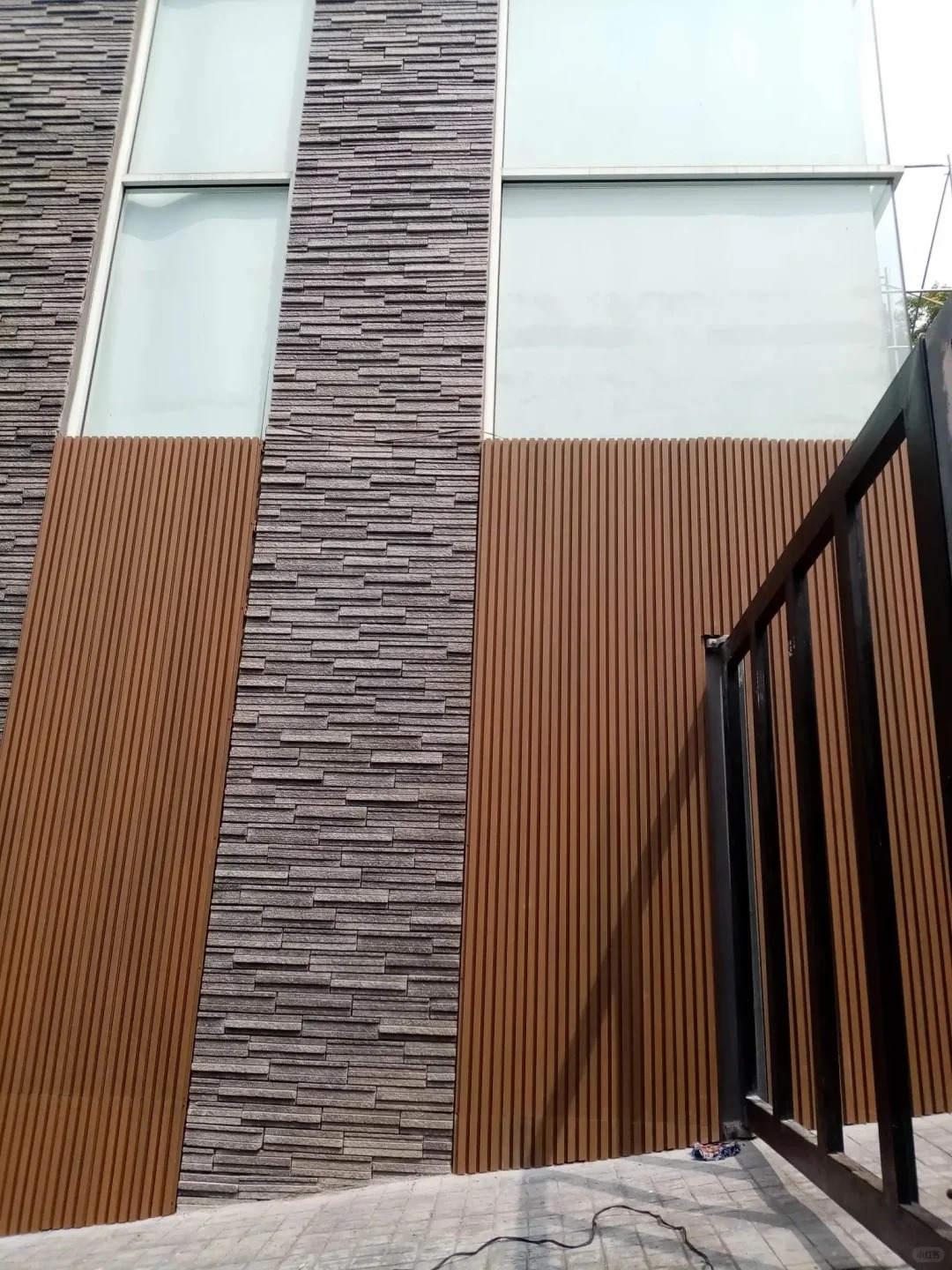
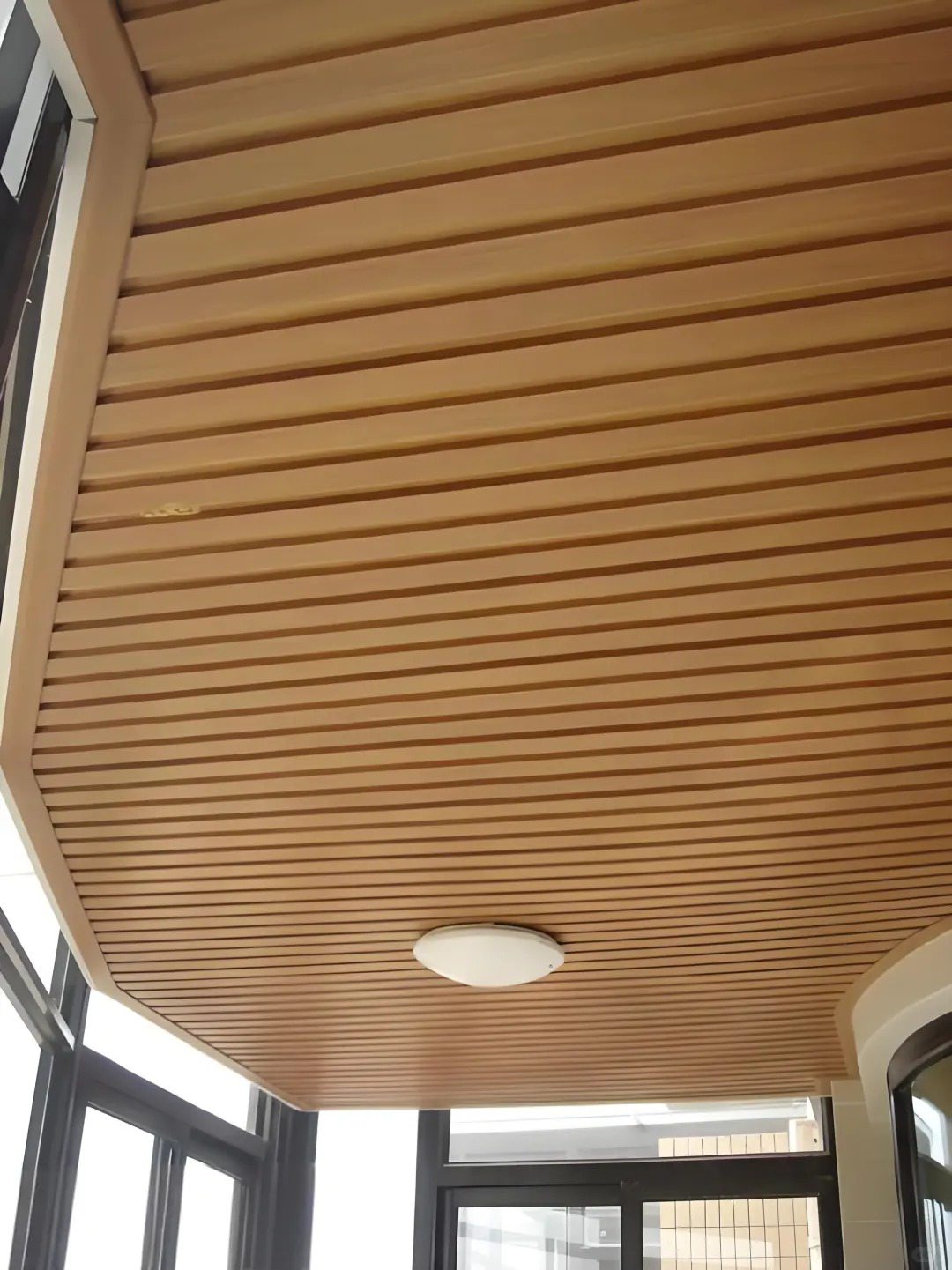
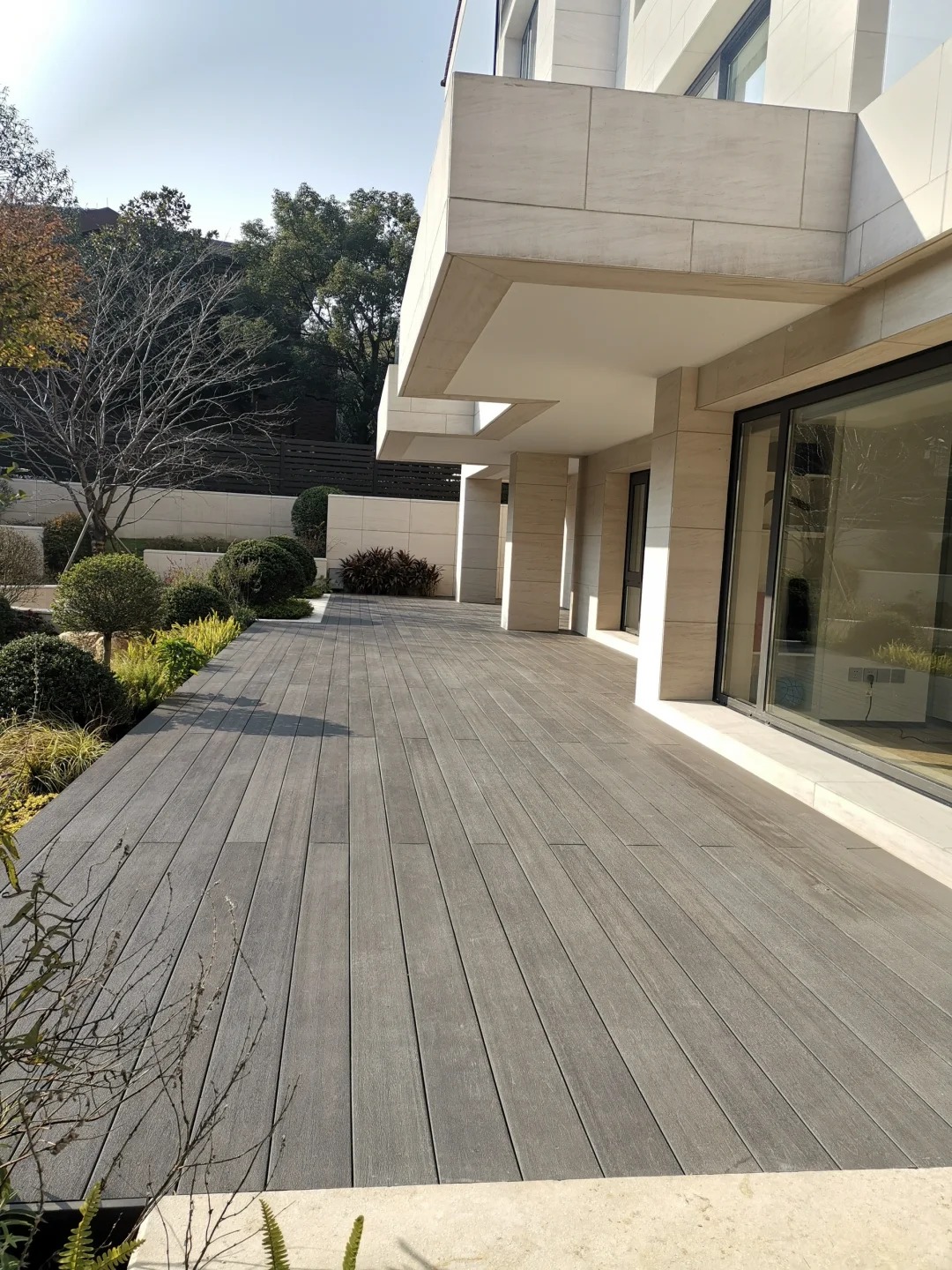
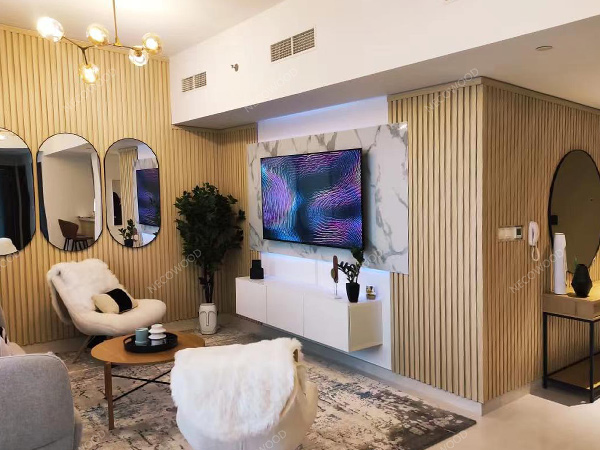
WPC composite boards are used in commercial and residential spaces. The following application areas are common in projects ranging from single offices to hotel and retail fit-outs.
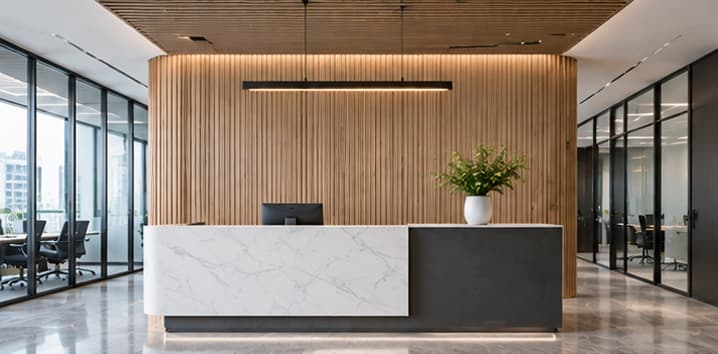
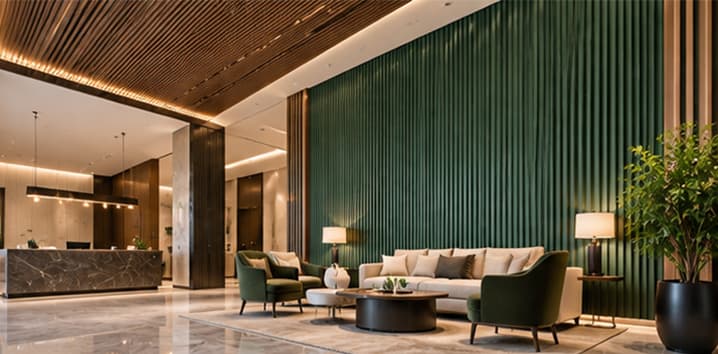
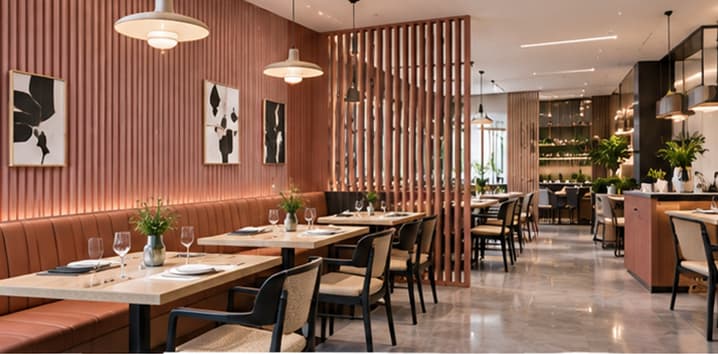
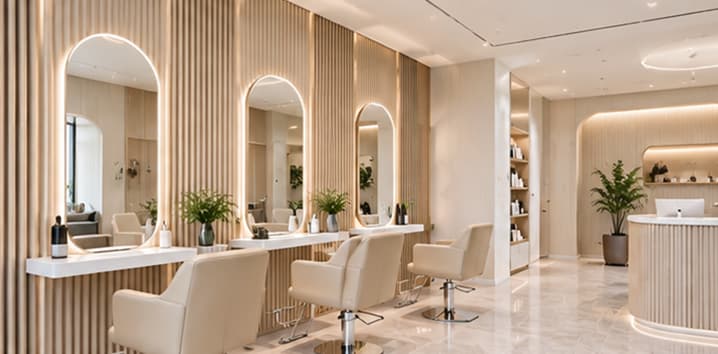
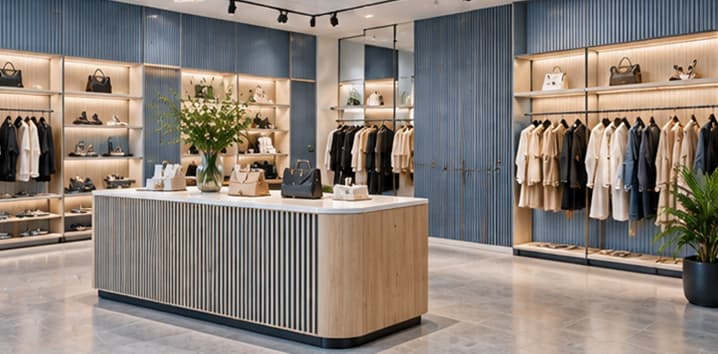
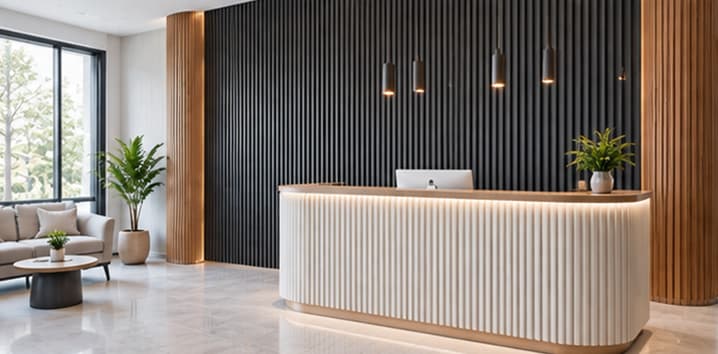
WPC composite board is installed using battens or a subframe, fixed with concealed clips or stainless steel screws. The steps below apply to wall and ceiling installations.
The following projects use WPC composite boards supplied by Necowood. Client names and locations are withheld, but the specifications and results are from verified installations.
Application: Corridor wall panelling and reception counters
Area: 1,800 m² of WPC composite board
Environment: 80%+ relative humidity, year-round
Result after 18 months: No swelling, warping, or surface degradation. No refinishing required.
Application: Partition walls and ceiling panels
Area: 620 m²
Environment: High-traffic area, daily cleaning
Result since installation: No refinishing or replacement required. Surface maintained with mild soap and water.
Application: Display walls and checkout counters
Stores: Multiple locations
Environment: Daily customer contact, frequent cleaning
Result: Boards maintained surface finish and colour consistency across all stores.
WPC composite board absorbs below 0.5% water by weight (ASTM D570), compared to 12–18% for untreated wood and 10–15% for MDF. This 24–36x lower absorption is why WPC does not swell, warp, or rot in kitchens, bathrooms, and humid environments.
Yes. WPC composite board absorbs below 0.5% water (ASTM D570) and is suitable for kitchens, bathrooms, and utility rooms. It is not a food source for termites, so no chemical treatment is required at installation or over the board's 15+ year service life.
WPC composite board absorbs below 0.5% water (ASTM D570), while plywood absorbs 10–15% and requires edge sealing and moisture protection. WPC also resists termites and needs no painting or sealing. Plywood is cheaper upfront but requires more maintenance over time.
WPC composite board has a density of 1.2–1.4 g/cm³ and absorbs below 0.5% water. MDF has a density of 0.7–0.8 g/cm³ and absorbs 10–15% water, causing it to swell and deform. WPC can be used in wet areas and high-humidity environments; MDF cannot.
WPC composite boards are used for hotel lobby walls, corridor panelling, room feature walls, office reception counters, partition walls, ceiling panels, and furniture surfaces. Applications include offices, hotels, restaurants, salons, retail stores, and reception counters.
Necowood WPC composite board MOQ is 500 m² per colour. Lead time is 25–30 days for standard colours. OEM custom colours are available at 1,000 m². Free samples are available on request.
WPC composite board pricing depends on thickness, finish, and order volume. Contact Necowood for a project-specific quotation. Factory-direct pricing is available for orders above 500 m².
WPC composite board is installed using battens or a subframe at 400–600mm spacing, fixed with concealed clips or stainless steel screws. Panels should be acclimated 24 hours before installation, and expansion gaps of 3–5mm should be left at edges.
Includes board specifications, density and water absorption data, finish options, MOQ, and application guidance for residential and commercial projects.
Nantongbang Industrial Park, No. 80, Fumin Road, Yuanshanbei Village, Changping Town, Dongguan City, Guangdong, China