
News

“You’re paying to ship heavy air” – Why Necowood hollow WPC cuts freight costs and carbon

2026-05-14 0 Leave me a message
Necowood News: Lightweight WPC Slashes Freight Costs & Carbon Footprint

May 14, 2026 Product insight Logistics & Sustainability

“You’re paying to ship heavy air” – Why Necowood hollow WPC cuts freight costs and carbon

Lightweight design, recycled materials, and zero maintenance: how Necowood WPC boards outperform traditional timber and cement fibreboard from factory to job site.

Most building material suppliers want you to focus on the price per square meter. The real budget killer, however, is weight. Contractors often discover this only after the freight invoice arrives: cement fibreboard is brutally heavy, and even treated pine can be wet, dense, and inefficient to transport. Necowood engineered a better way – hollow-core WPC boards that are up to 35% lighter per usable square meter, without sacrificing strength or durability.
The one truck test: who delivers more decking?

38 kg/m²
Cement fibreboard (solid)
~260 m² per truck
14 kg/m²
Treated pine (KDAT)
~710 m² per truck
9 kg/m²
Necowood WPC (hollow profile)
~1,110 m² per truck
Real world example: A 10,000 m² coastal boardwalk project. Cement fibreboard would require 39 truck trips. Treated pine: 14 trips. Necowood WPC: only 9 trips. That translates to 76% fewer trucks compared to cement board, cutting fuel costs and transport emissions dramatically.
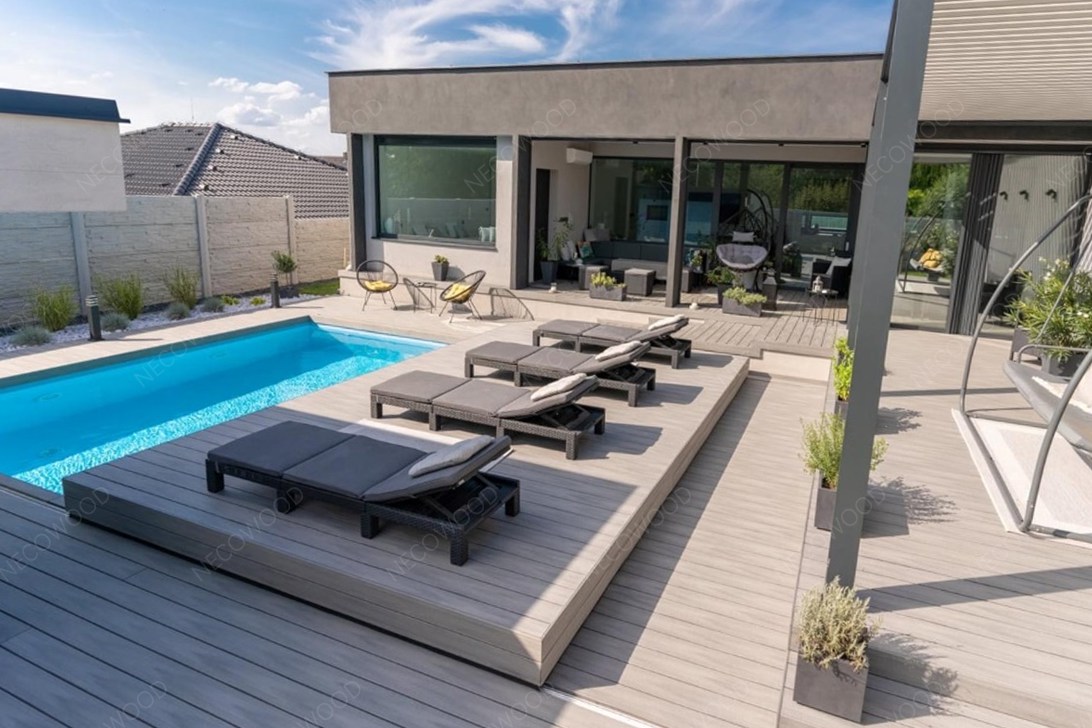
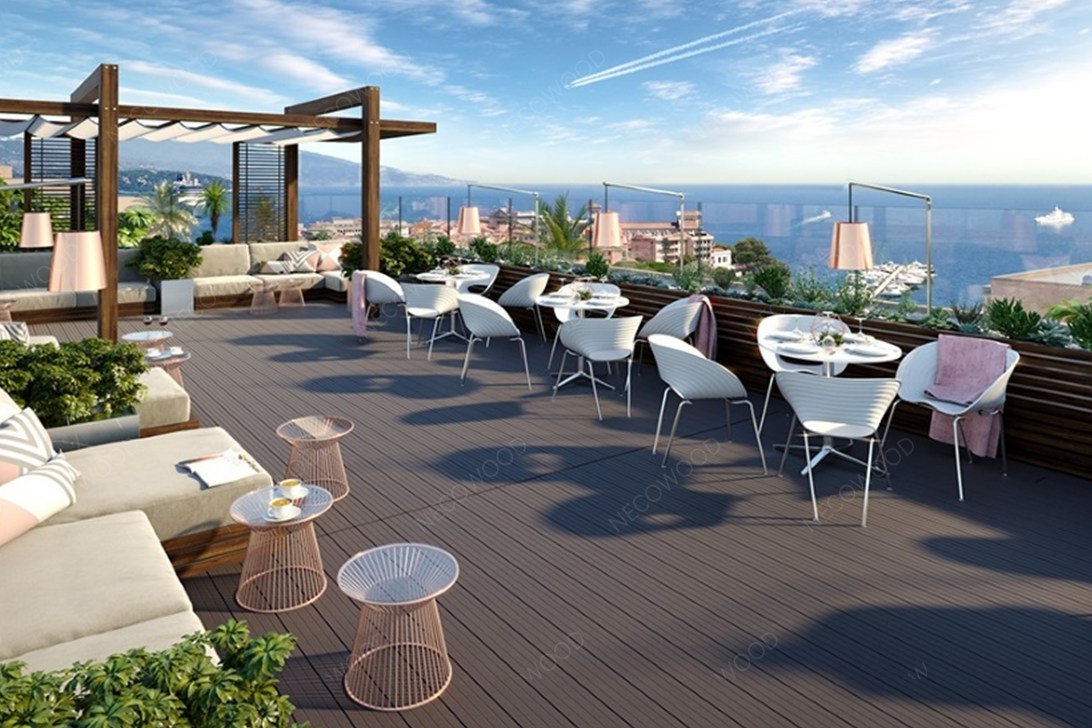
Necowood decking after years of use
Necowood pool deck in tropical climate – three years, no maintenance
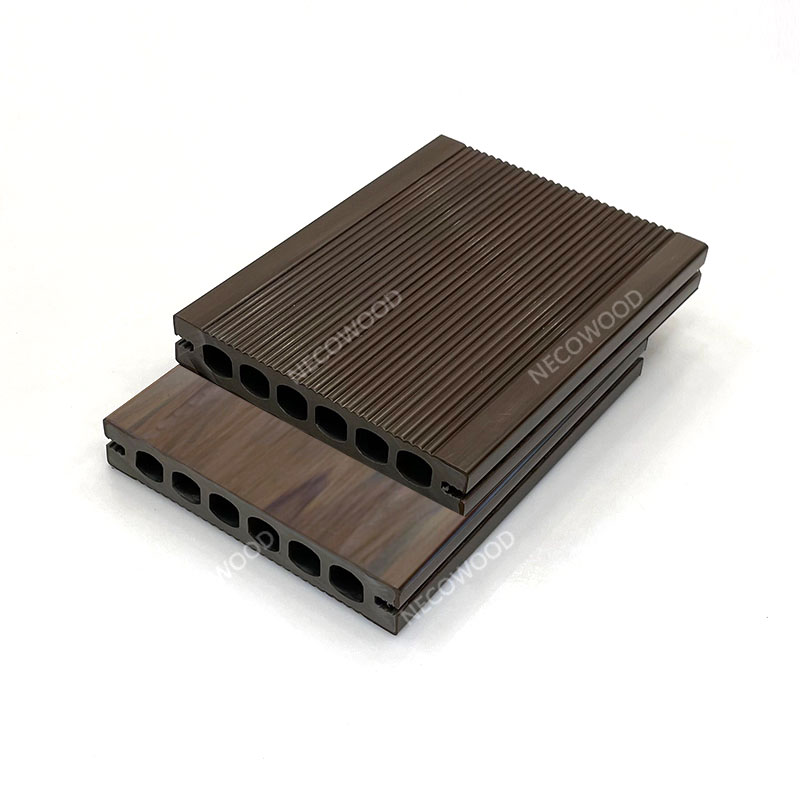
Lightweight WPC hollow core profile
Hollow-core design reduces weight while preserving strength

Global reach: certified for major markets

North America – ASTM E84 Class A European Union – REACH, EU Timber Regulation Australia / NZ – AS 4586, salt spray resistant Southeast Asia – termite proof, high humidity tolerance

Whether your project is in Florida, Berlin, Melbourne, or Bali, Necowood WPC meets local building codes and climate demands. The material does not warp, rot, or attract insects, and it requires no annual staining or sealing – a major advantage over wood in any region.

Environmental impact without greenwashing

Every ton of Necowood WPC contains 400–500 kg of recycled plastic (post-industrial and post-consumer HDPE/PP) combined with agricultural byproducts such as rice hulls or wood flour. This replaces virgin timber and diverts waste from landfills. Compared to treated pine, Necowood eliminates the need for toxic preservatives and reduces landfill contribution by over 1.5 tons per ton of material. Moreover, the lighter weight directly lowers transport-related CO₂ emissions across the supply chain.

Treated pine
Requires chemical treatment (CCA/ACQ), needs re-staining every 2-3 years, lifespan 8-12 years outdoors. High maintenance cost and VOC emissions.
Cement fibreboard
Energy-intensive production, very heavy shipping footprint, prone to cracking under freeze-thaw cycles. Low recyclability.
Necowood WPC
Recycled content, zero maintenance, 25-year service life, 100% recyclable at end of life. Transport CO₂ reduced by up to 75% versus cement board.

Total cost of ownership: Necowood saves from year four

$42/m²
Treated pine (10-year cost)
$46/m²
Cement fibreboard (10-year)
$34/m²
Necowood WPC (10-year total)

Initial material cost for Necowood is slightly higher than low-grade timber, but the savings from lighter freight, faster installation (clip system, no face screws), and zero maintenance over a decade quickly outweigh the difference. By year four, the total cost balances; by year ten, Necowood projects are typically 15-20% more economical – with a deck that still looks new.

Case study: Bali hotel pool deck
A resort in Seminyak replaced rotting wood with Necowood hollow WPC. Freight costs from the regional hub dropped 32% compared to cement board. Installation finished two days early thanks to the lightweight planks and click-lock system. After 24 months of tropical weather and heavy use: no warping, no fading, zero repairs. The general manager reported significant savings on maintenance labor and a much happier guest experience.

Strength and lightness: the hollow core advantage

Some speculators assume WPC is inherently heavy – that applies to old solid composites. Necowood uses thin-wall hollow profiles, analogous to steel bridge trusses: empty interior spaces maintain structural rigidity while shedding unnecessary weight. Independent tests show equivalent bending strength and impact resistance to solid timber alternatives, with 35% less weight per square meter of coverage.

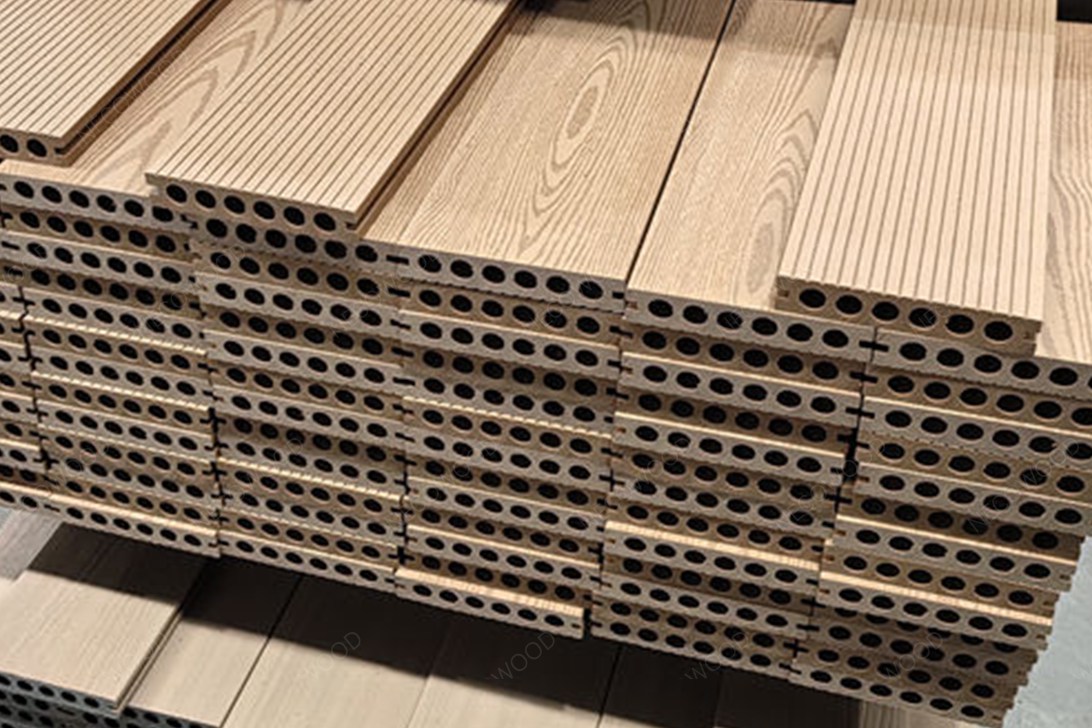
Cross section of hollow WPC board
Internal structure: optimized for strength-to-weight ratio
Truck loading Necowood decking
More square meters per load = fewer deliveries

Conclusion: a smarter choice for logistics and the planet

When evaluating decking, cladding, or landscape materials, do not stop at the unit price. Ask your supplier: how many square meters fit on a standard truck? What are the long-term maintenance requirements? Is the material truly recyclable? Necowood WPC delivers clear answers: higher payload per truck, zero annual upkeep, and a closed-loop recycling pathway. It is an investment in both operational efficiency and environmental responsibility.

Related News
Leave me a message
X
We use cookies to offer you a better browsing experience, analyze site traffic and personalize content. By using this site, you agree to our use of cookies. Privacy Policy
Reject Accept