


QR Code

Contact Us


Email

Address
Nantongbang Industrial Park, No. 80, Fumin Road, Yuanshanbei Village, Changping Town, Dongguan City, Guangdong, China

How WPC wall panels help architects and developers reduce costs, cut carbon emissions, and simplify project logistics
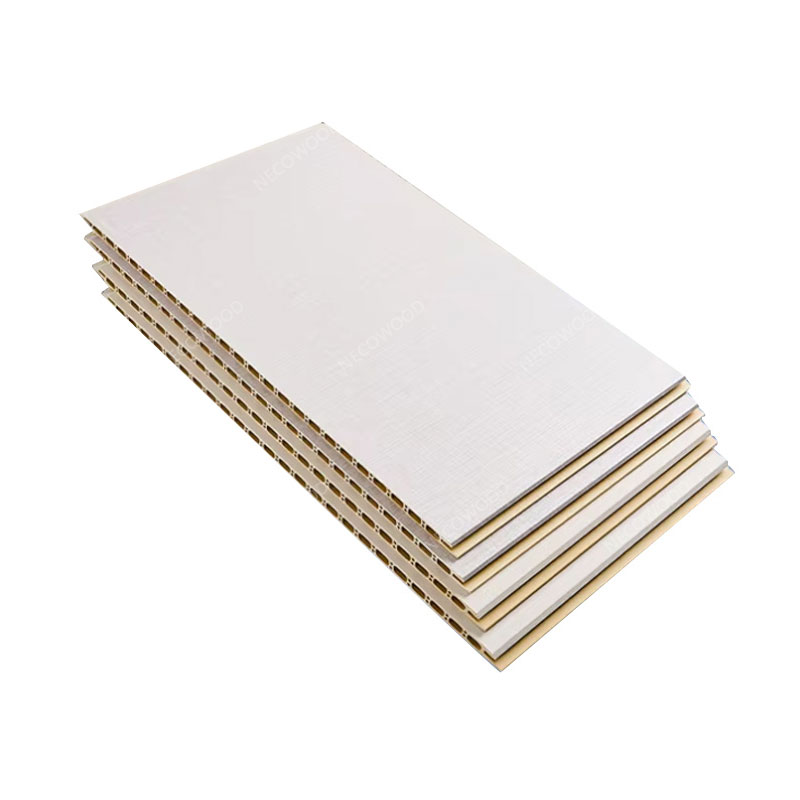
WPC is a green building material because it delivers four measurable benefits: Lightweight (9kg/m² — cuts shipping costs by 60-75%), zero-maintenance (no painting, no sealing, no staining), low-carbon (up to 90% recycled content, 30-year service life), and zero-formaldehyde (safe for indoor air quality). These properties reduce embodied carbon, simplify logistics, and minimize waste over the building's lifecycle.
"Every project faces the same pressures: budget, timeline, and sustainability targets. WPC is the material that helps you solve all three."
— Necowood Project Engineering TeamArchitects and developers are under pressure to deliver buildings that are cost-effective, fast to construct, and environmentally responsible. Traditional materials — stone, cement board, aluminum — often force trade-offs: low cost but high maintenance, sustainable but heavy, durable but expensive.
WPC (Wood-Plastic Composite) wall cladding offers a different path. It combines lightweight construction, zero maintenance, high recycled content, and long service life — all in one material. This guide explains how WPC solves four of the biggest challenges in modern building projects.
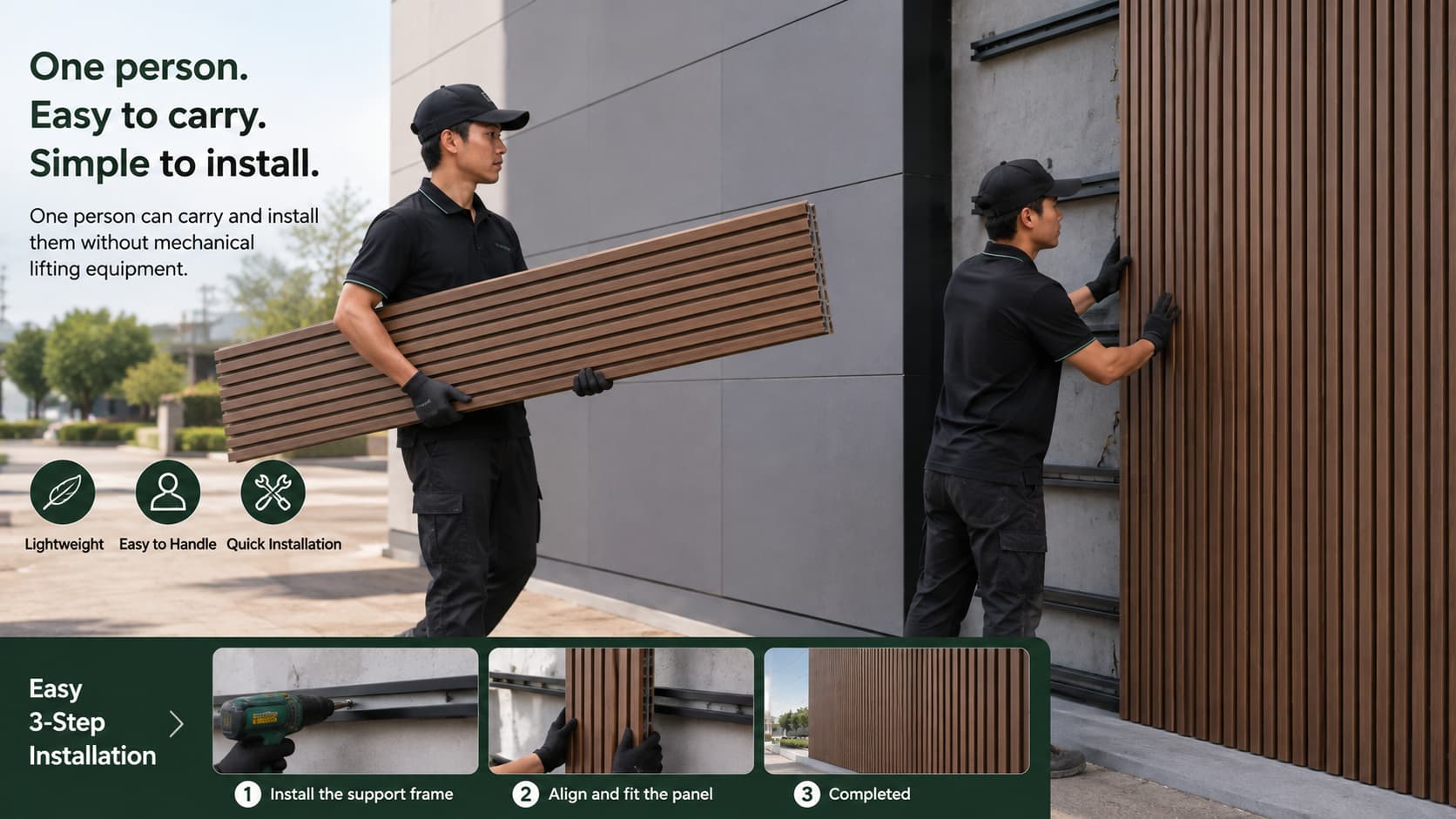
Weight is often overlooked in material selection, but it drives three major cost centers: freight, structural steel, and installation labor.
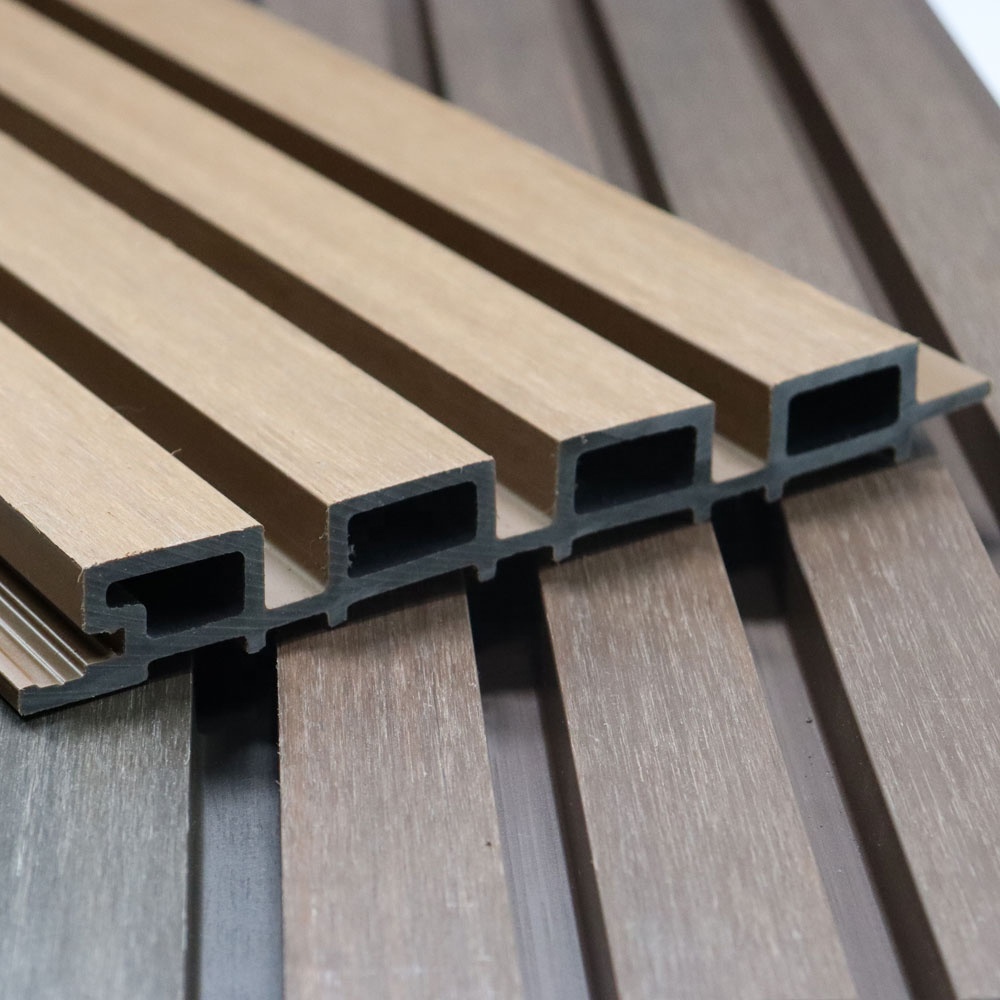
A 10,000m² project using cement fiberboard (38kg/m²) requires 77 truck trips. With Necowood WPC (9kg/m² hollow core), the same project needs just 18 truck trips — a 62% reduction in freight costs and 72% reduction in CO₂ emissions.
WPC panels can be cut with standard woodworking tools, drilled, and installed by a two-person crew without heavy lifting equipment. Cement board requires mechanical lifts and larger crews, increasing labor costs and extending construction timelines.
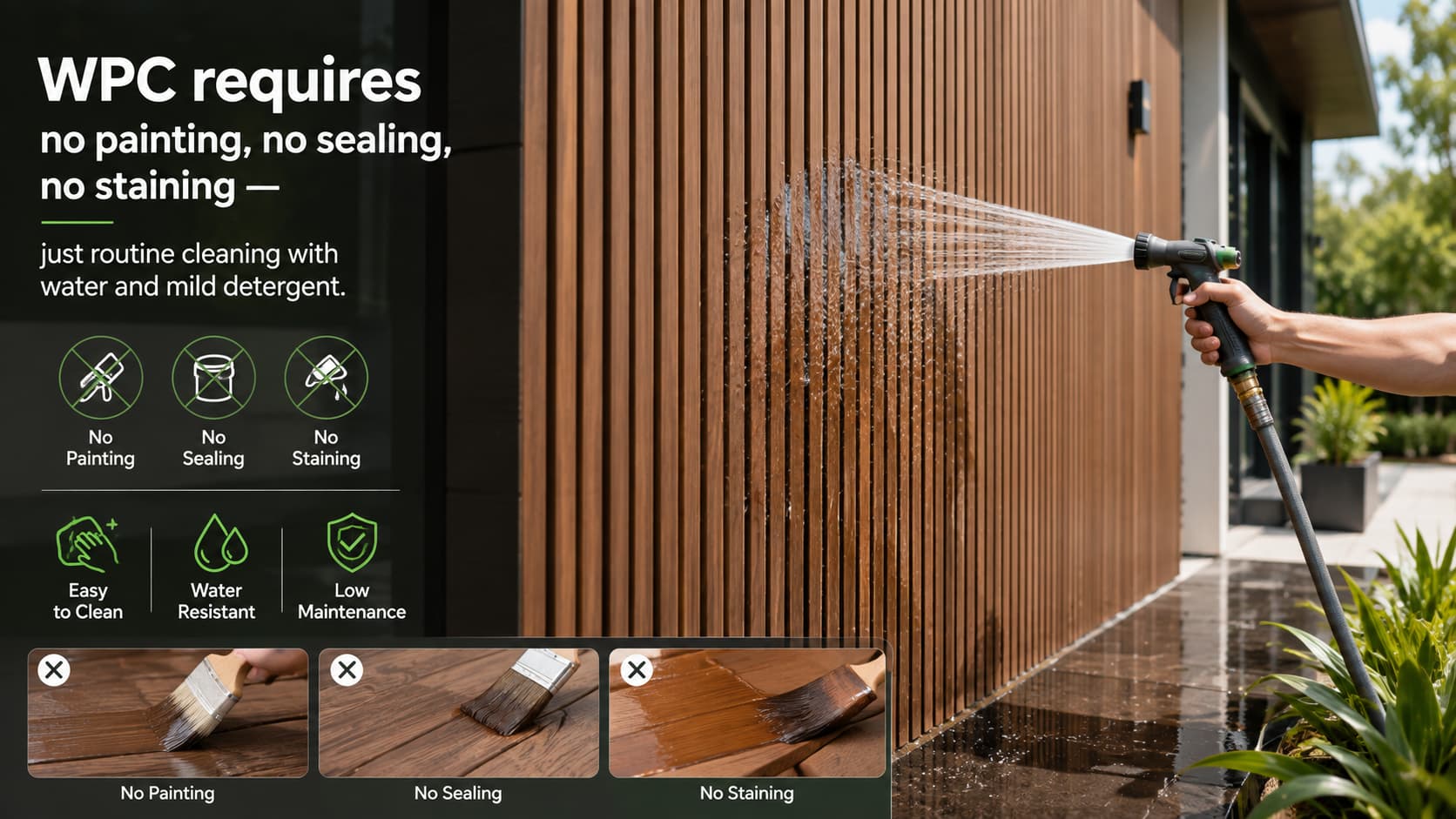
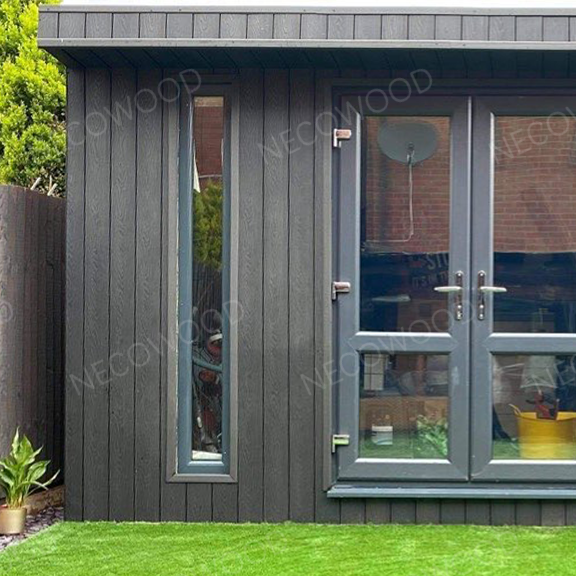
Traditional facades require repainting or resealing every 5-10 years. Over a 30-year building lifespan, this adds significant cost and disruption. WPC eliminates this expense entirely.
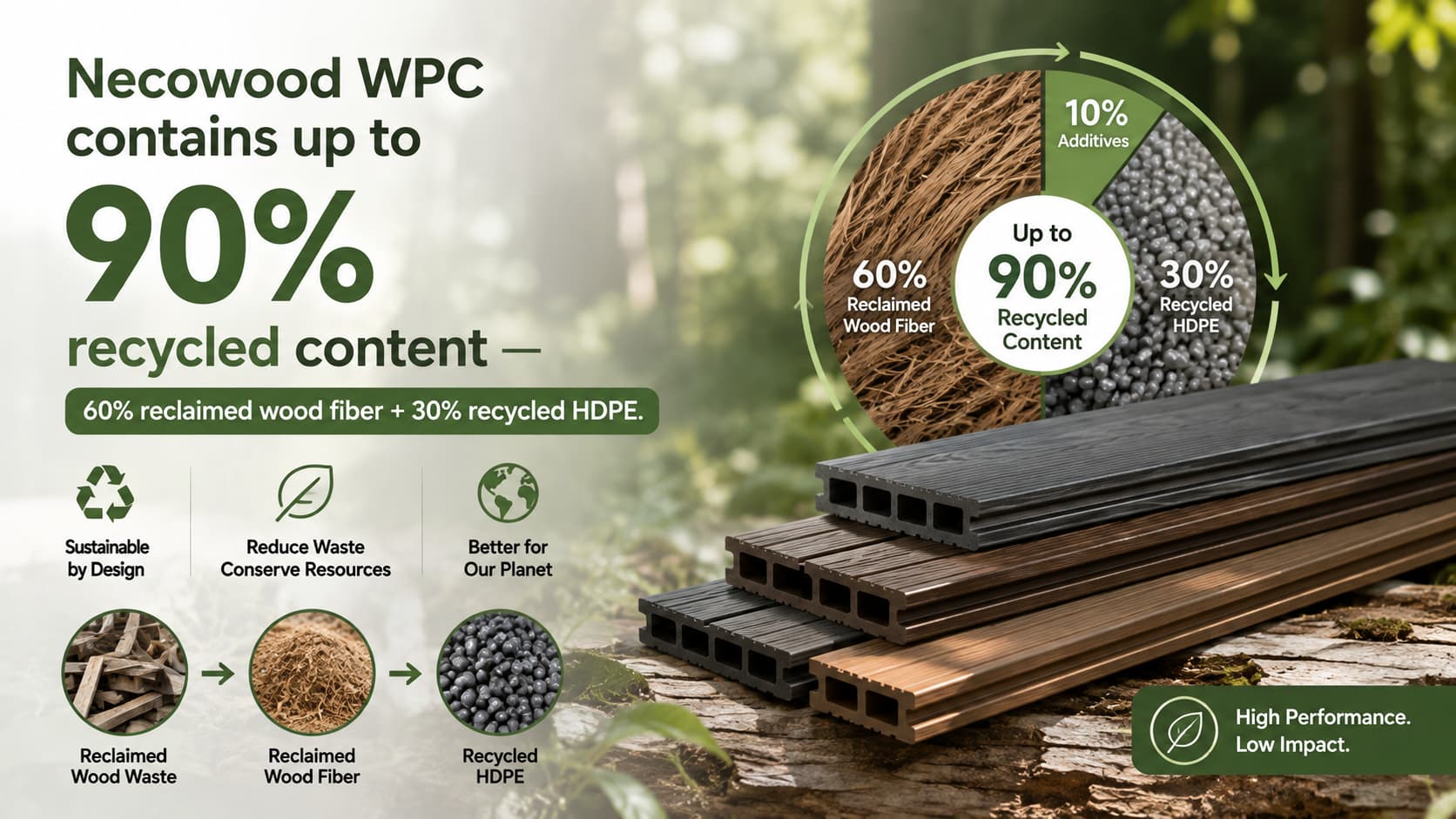
The construction industry accounts for 36% of global energy use and 39% of CO₂ emissions. Material selection is one of the most effective ways to reduce a building's environmental impact.
Indoor air quality is a growing concern in building design. Formaldehyde is a known irritant and carcinogen commonly found in building materials. Necowood WPC panels are 100% formaldehyde-free — making them suitable for schools, healthcare facilities, residential buildings, and commercial spaces where occupant health is a priority.
What makes WPC a green building material?
WPC is a green building material because it contains up to 90% recycled content (60% reclaimed wood fiber + 30% recycled HDPE), is zero-formaldehyde, lightweight (9kg/m²), requires zero maintenance, and has a 30-year service life. These properties reduce embodied carbon, simplify logistics, and minimize waste.
How does lightweight WPC reduce project costs?
Lightweight WPC (9kg/m² vs 38-50kg/m² for cement board or stone) reduces shipping costs by 60-75%, requires lighter structural support, and speeds up installation with simple woodworking tools. A 10,000m² project can save up to 30 truck trips and reduce carbon emissions by over 70%.
Does WPC require maintenance?
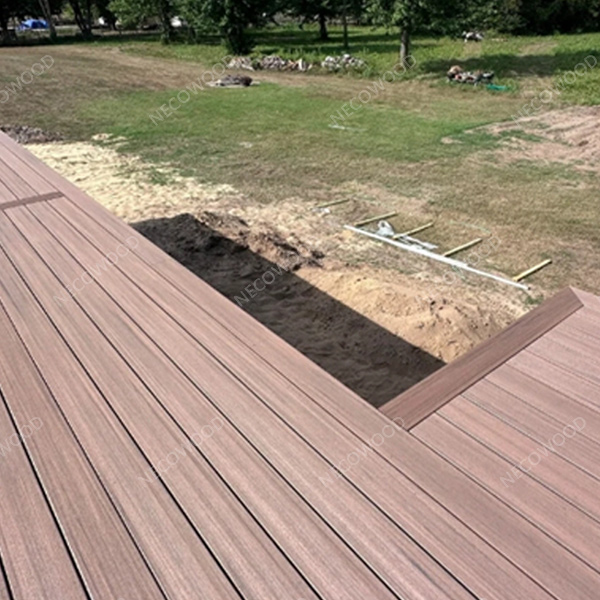
No. Premium ASA co-extruded WPC requires zero maintenance — no painting, no sealing, no staining. Routine cleaning with water and mild detergent is all that's needed. This eliminates costly 5-10 year repainting cycles and long-term maintenance budgets.
How long does WPC wall cladding last?
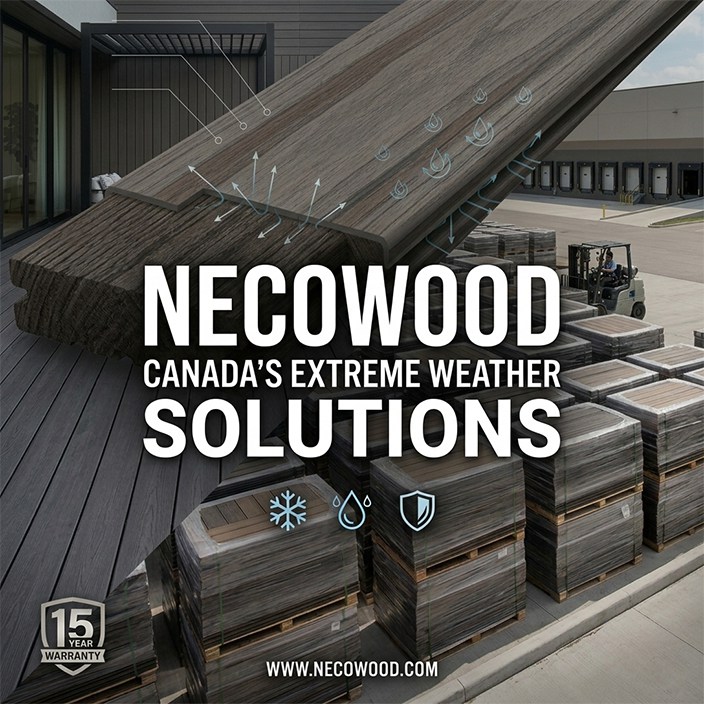
Necowood ASA co-extruded WPC is engineered for a 30+ year service life with a 25-year structural warranty. Field-verified in Dubai (78°C surface temperature), Canada (-40°C freeze-thaw), and Singapore (90% humidity) with zero degradation.
Is WPC formaldehyde-free?
Yes. Necowood WPC wall panels are 100% formaldehyde-free. The zero-formaldehyde formulation ensures safe indoor air quality, making them suitable for schools, healthcare facilities, and residential applications.
Nantongbang Industrial Park, No. 80, Fumin Road, Yuanshanbei Village, Changping Town, Dongguan City, Guangdong, China