How ASA Co-Extrusion Fixed a Tropical Resort Decking Failure: A Case Study
In early 2025, a resort in a tropical coastal region faced an expensive problem. The WPC decking around their pool and terrace areas — installed just 18 months earlier — was failing.
Boards were swelling and warping. Surface chalking was visible across large areas. Fasteners were working loose. Guests had complained about splinters and uneven surfaces.
The resort's facilities management team had a straightforward question: why did this happen — and what would actually last in this environment?
What went wrong with the original installation
The original decking was standard single-layer WPC — a common choice for mid-range resort projects. But standard WPC is not designed for tropical conditions.
The resort had to choose: replace the decking at significant cost, or leave it and risk guest complaints and liability.
What they chose instead
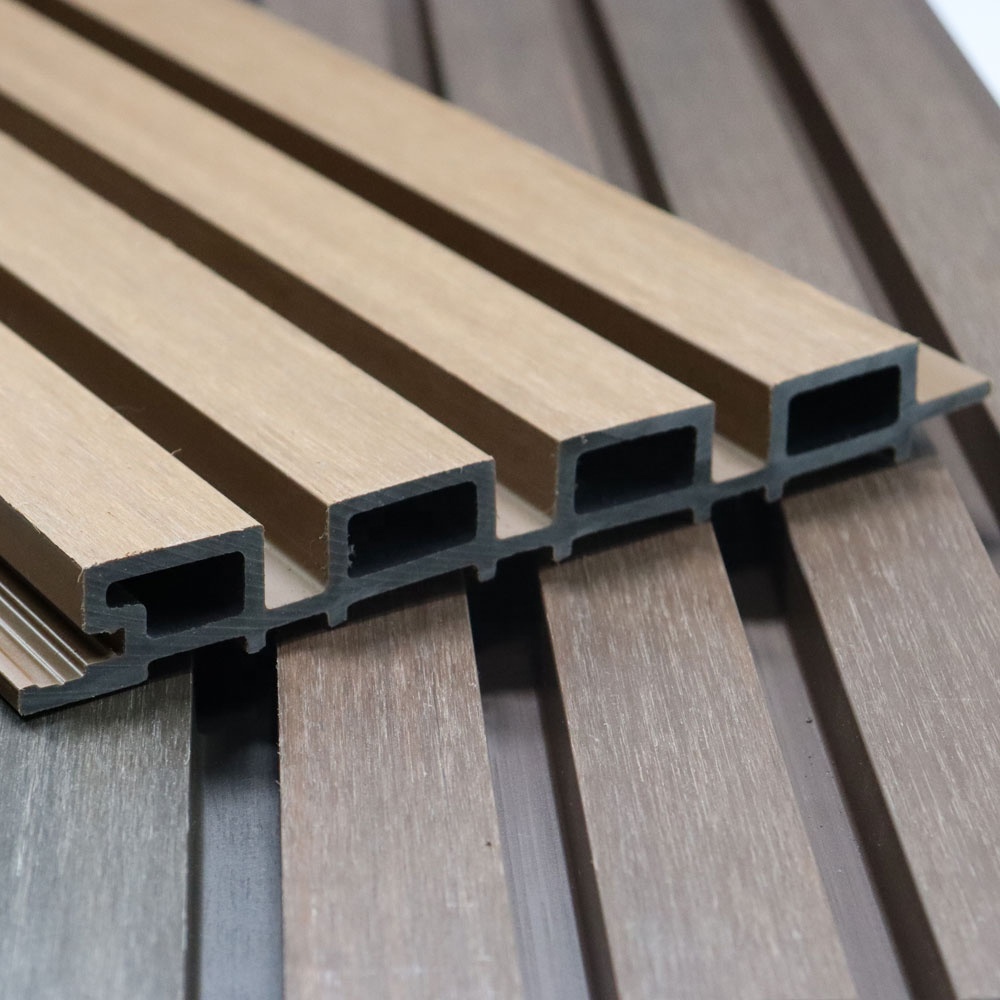
After evaluating alternatives — solid timber (too expensive, high maintenance), PVC decking (limited aesthetic options), and ASA co-extruded decking — the resort selected Necowood's ASA co-extruded decking.
The decision came down to documented performance data. The ASA cap layer provided three things the original decking lacked:
- Moisture barrier — hydrophobic ASA cap prevents water ingress. Core contains no wood fiber, so there's nothing to absorb moisture.
- UV protection — UV stabilizers are integrated into the ASA layer, not just applied to the surface. 10+ years of documented color stability.
- Dimensional stability — low coefficient of thermal expansion. No wood fiber means no moisture-induced swelling.

Before and after
- Swelling and buckling after 18 months
- Surface chalking and uneven fading
- Loose fasteners creating hazards
- Guest complaints
- Zero swelling or warping after 14 months
- Color remains consistent
- Fasteners secure
- No guest complaints
What the resort says
"We made a mistake the first time. We chose the lower-priced option, and we paid for it. The Necowood decking is in a different category — it doesn't swell, doesn't fade, and we don't have to worry about it.
If we'd known the cost of the failure, we would have made a different decision upfront."
— Senior Facilities Manager, Resort Operations
Key takeaways
- Standard WPC is not suitable for tropical climates. Wood fiber content makes it vulnerable to moisture and UV degradation.
- ASA co-extrusion is engineered for these conditions. The cap layer and PVC core eliminate the failure mechanisms of traditional WPC.
- Upfront cost vs. lifetime cost. The lower-priced option in this project ended up being more expensive when replacement costs were factored in.
Ready to explore ASA co-extruded decking for your project?
Necowood manufactures decking for tropical climates, with 16 years of experience and exports to 35+ countries.
Necowood has been manufacturing decking for tropical markets for 16 years, with products exported to 35+ countries. ASA co-extruded decking is engineered specifically for environments where traditional WPC fails.