News

WPC Indoor Wall Panels — Designer's Selection Guide 2026

2026-08-01 0 Leave me a message
WPC Indoor Wall Panels — Designer's Selection Guide 2026 | Necowood
Designer's Guide August 2026 · 8 min read

WPC Indoor Wall Panels — Designer's Selection Guide 2026

A practical guide for interior designers and architects on selecting WPC wall panels: material composition, surface finish, thickness, fire rating, acoustic performance, and application-specific recommendations.
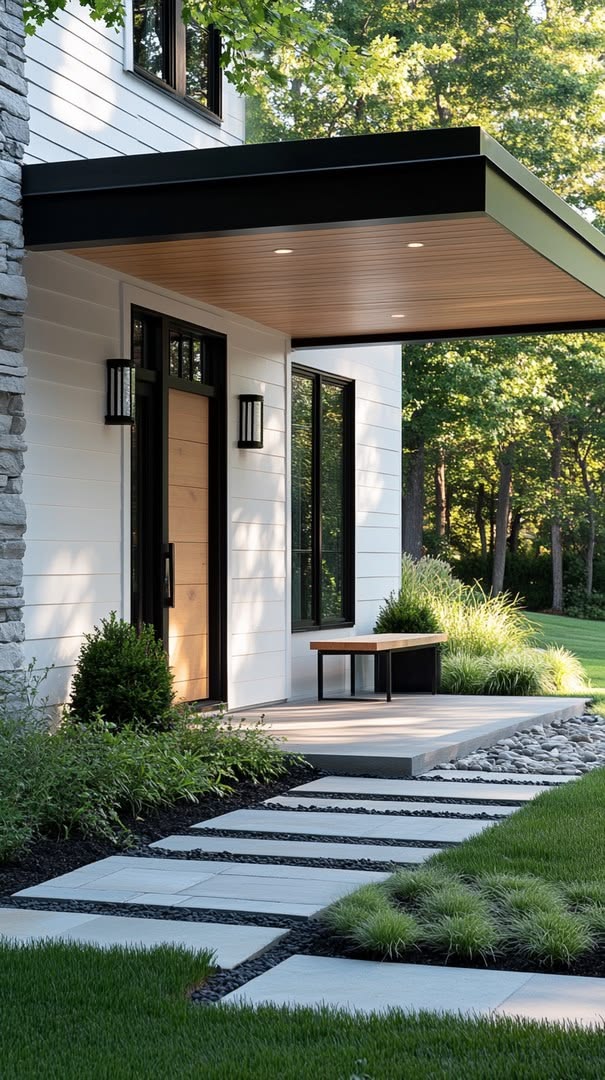
WPC wall panels in a modern interior design setting
WPC wall panels in a contemporary interior setting — natural wood texture, modern design

WPC wall panels have become a go-to specification for interior designers in 2026. They are showing up in projects that wouldn't have touched them two years ago — boutique hotels, high-end residential, corporate interiors. Not because the material changed overnight, but because designers started seeing it differently.

As a designer, you're not looking for "another wall panel." You're looking for a material that looks real, holds up, and saves your client from future complaints. This guide breaks down what you need to know to specify WPC with confidence.

"Designers don't care about the material name. They care about three things: does it look real? Does it hold up? Does it save them from future complaints?"
— Necowood Design Council

Why WPC is gaining traction in interior design

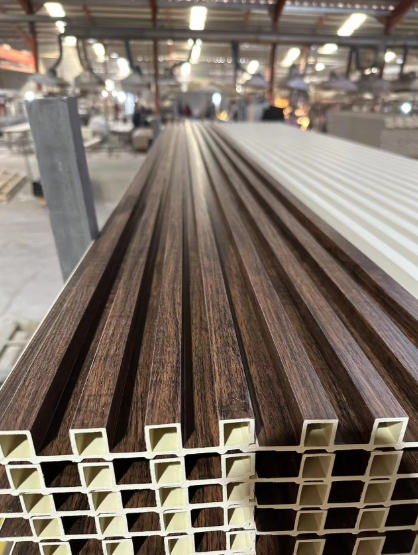
WPC wall panel texture close-up showing wood grain and matte finish
WPC wall panel surface — 3D deep embossing and ultra-matte finish for realistic wood texture

WPC (Wood-Plastic Composite) combines wood fibers with polymer materials, engineered specifically for interior wall applications. The material offers a balanced solution that traditional materials struggle to match:

  • Wood-like appearance — natural grain texture without the variability of real timber
  • Moisture resistance — does not warp, crack, or swell in humid environments
  • Stable performance — consistent quality across large wall surfaces
  • Low maintenance — no painting, sealing, or refinishing required
  • Fast installation — clip systems or concealed screws with minimal dust and noise

In 2026, biophilic design has moved from trend to standard. Wood-grain WPC panels are seeing record demand as designers embrace nature-inspired textures. The appeal is clear: these panels deliver the warmth of natural materials without the maintenance burden.

Five criteria for selecting WPC wall panels

📐
1. Thickness
Interior WPC wall panels typically range from 5mm to 9mm. 5-7mm suits lightweight residential applications. 8-9mm offers better flatness, higher bending strength, and allows wider furring spacing (up to 60cm). For commercial or high-impact areas, consider 9-12mm.
🎨
2. Surface finish & texture
2026 is the year of matte and ultra-matte finishes. Specifiers are choosing finishes with light reflectance below 12% — reducing glare and improving screen visibility. For tactile realism, 3D deep embossing (2.0mm) delivers a wood feel that printed textures cannot match.
🔥
3. Fire rating
For commercial interiors in the US, ASTM E84 Class A (Flame Spread Index ≤25, Smoke Developed Index ≤450) is the baseline. For EU projects, EN 13501-1 B1 (B-s1,d0) is required for buildings above 18m.
🔊
4. Acoustic performance
Fluted or grooved WPC panels can achieve NRC (Noise Reduction Coefficient) values of 0.65-0.80. For offices, restaurants, and hospitality spaces where sound control is a priority, specifying acoustic-grade panels is recommended.
📋
5. Certifications & documentation
For green building certification, confirm availability of EPDs (Environmental Product Declarations), HPDs (Health Product Declarations), and low-VOC certifications like GREENGUARD Gold or CARB Phase 2.

WPC vs PVC: What designers need to know

One of the most common specification decisions is WPC versus PVC. Here's how they compare:

WPC ✓ Wood-like finish ✓ High impact resistance ✓ Superior strength ✓ Sound insulation ✓ Long-term investment
PVC — Plastic finish — Lower impact resistance — Lighter weight — Weaker sound insulation — Budget-friendly

WPC offers superior aesthetics, durability, and acoustic performance for projects where material quality is visible and matters.

When to specify WPC: Projects requiring a natural wood aesthetic, durability, and long-term performance — boutique hotels, high-end residential, corporate interiors, and commercial spaces where material quality is visible and matters.

When PVC may be appropriate: Budget-constrained projects, temporary installations, or areas where appearance is less critical.

Technical specifications at a glance

Standard thickness (interior) 5mm, 7mm, 9mm — 5-7mm for lightweight, 8-9mm for higher strength
Surface finish Ultra-matte (reflectance <12%), 3D deep embossing (2.0mm), standard embossing
Fire rating (US) ASTM E84 Class A — FSI ≤25, SDI ≤450
Fire rating (EU) EN 13501-1 B1 (B-s1,d0)
Acoustic performance NRC 0.65-0.80 with fluted or grooved designs
Installation Clip systems, concealed screws, or direct adhesive
Certifications GREENGUARD Gold, CARB Phase 2, EPDs, HPDs

Application guide by space

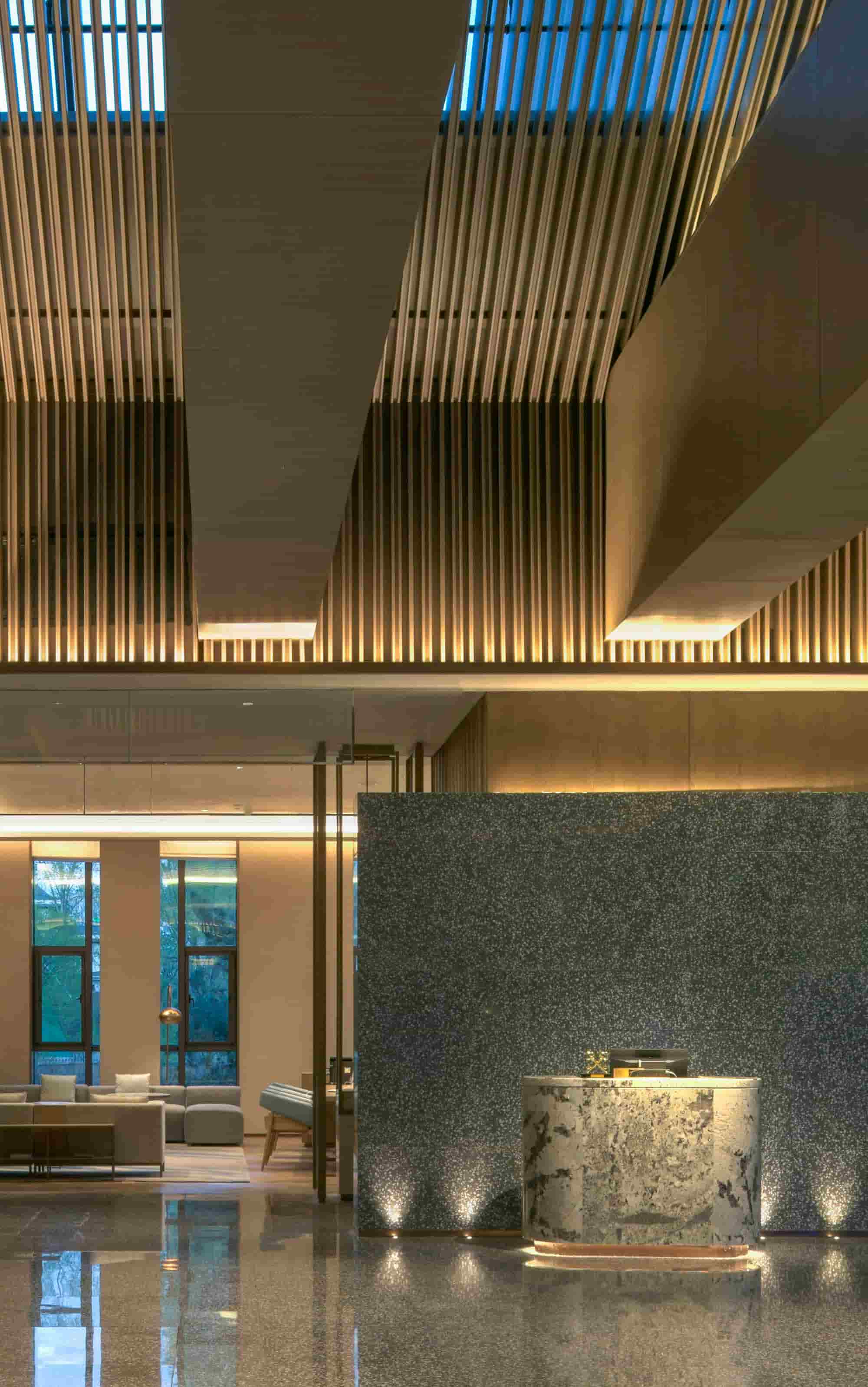
WPC wall panels installed in a commercial interior space
WPC wall panels in a commercial interior — clean lines, natural texture, modern aesthetic
🏠 Residential
Living room feature walls, bedroom accent walls, TV backgrounds, stairwells, and hallways.
Recommended: 5-7mm thickness, 3D deep embossing, matte finish
🏨 Hospitality
Hotel lobbies, corridors, guest rooms, and restaurant dining areas. Increasingly specified for boutique hotels.
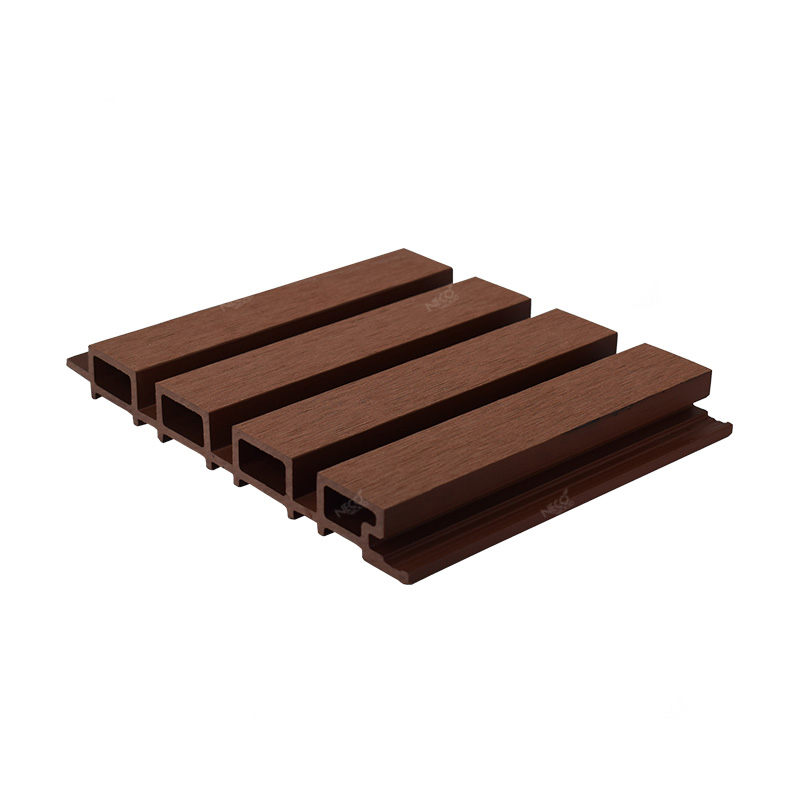
Recommended: 8-9mm thickness, fluted or vertical slat designs, Class A fire rating
🏢 Commercial
Office meeting rooms, retail stores, showrooms, and co-working spaces.
Recommended: 8-9mm thickness, ultra-matte finish (reflectance <12%), acoustic-grade options
🚿 Wet areas
Kitchens, bathrooms, and other high-moisture environments.
Recommended: WPC only (not PVC), 100% waterproof, anti-mold formulation
🔊 Acoustic spaces
Meeting rooms, restaurants, studios, and spaces where noise control is a priority.
Recommended: Fluted or grooved panels, NRC ≥0.65
🏛️ Public buildings
Schools, hospitals, and public interiors where safety and durability are critical.
Recommended: Class A fire rating, GREENGUARD Gold, low-VOC, antimicrobial options

2026 design trends for WPC wall panels

Several trends are shaping how designers specify WPC wall panels in 2026:

  • 3D deep embossing — demand for embossed panels is up 53% year-over-year. Flat, printed wood patterns are considered outdated.
  • Ultra-matte finishes — preferred by 74% of commercial specifiers. Glare is a dealbreaker in commercial interiors.
  • Vertical slat and fluted designs — the most popular trend for 2026. These add height, rhythm, and acoustic dampening.
  • Biophilic design — spaces incorporating natural textures can improve occupant happiness by 15% and productivity by 6%.
  • Non-repeating grain patterns — repeating patterns look cheap. Designers now specify panels with no visible repeats over large surface areas.

Necowood: designed for designers

Necowood WPC wall panel product range showing different finishes
Necowood WPC wall panel range — diverse finishes for every design requirement

Necowood has been manufacturing WPC wall panels for 16+ years, exporting to 35+ countries. Our 2026 interior collection was built on direct feedback from designers:

  • 3D deep embossing (2.0mm) — physical grain depth that reads as real wood, even up close
  • Ultra-matte finish — reflectance below 12%
  • Non-repeating grain patterns — no visible repeats over large surfaces
  • 100% waterproof — suitable for kitchens, bathrooms, and high-humidity zones
  • Zero maintenance — no sanding, sealing, or staining
  • Full documentation — EPDs, HPDs, VOC test reports, and fire test summaries for project submissions

📋 Designer's checklist — before you specify

  • What is the application environment? (dry, wet, high-traffic, acoustic?)
  • What thickness is required? (5-7mm residential, 8-9mm commercial, 9-12mm high-impact)
  • What finish is specified? (ultra-matte, 3D deep embossing, standard?)
  • What fire rating is required? (ASTM E84 Class A? EN 13501-1 B1?)
  • Are acoustic properties needed? (NRC ≥0.65 for offices, restaurants)
  • What documentation is required? (EPDs, HPDs, test reports for green building certification?)
  • Does the supplier provide consistent color and grain across batches?

Frequently Asked Questions

What thickness of WPC wall panel should I specify for interior use?
For interior wall cladding, 5-9mm is standard. 5-7mm suits lightweight residential applications; 8-9mm offers better flatness, higher bending strength, and allows wider furring spacing (up to 60cm).
What is the difference between WPC and PVC wall panels?
WPC panels are heavier, denser, and offer superior strength, impact resistance, and a more natural wood-like finish. PVC panels are lighter, more affordable, and easier to install but have a more plastic appearance and lower durability. WPC is the better long-term investment for projects requiring aesthetics and durability.
What fire rating should I look for in WPC wall panels for commercial projects?
For commercial interiors in the US, ASTM E84 Class A (Flame Spread Index ≤25, Smoke Developed Index ≤450) is the baseline. For EU projects, EN 13501-1 B1 (B-s1,d0) is required for buildings above 18m.
Can WPC wall panels contribute to acoustic performance?
Yes. WPC panels with fluted or grooved designs can achieve Noise Reduction Coefficient (NRC) values of 0.65-0.80, making them suitable for offices, restaurants, and spaces where sound control is a priority.
Does Necowood provide documentation for green building certification?
Yes. Necowood provides EPDs (Environmental Product Declarations), HPDs (Health Product Declarations), VOC test reports, and fire test summaries to support LEED, WELL, and BREEAM certification.

Ready to specify Necowood WPC wall panels for your next project?

Necowood manufactures WPC wall panels for residential and commercial interiors — waterproof, zero-formaldehyde, and designed for long-term performance.
WPC indoor wall panels designer guide, how to choose WPC wall panels, WPC vs PVC comparison, WPC wall panel thickness guide, WPC fire rating ASTM E84, WPC acoustic performance NRC, WPC selection criteria for designers, interior WPC wall panel specifications, Necowood designer guide, WPC wall panel applications residential commercial hospitality.
A practical guide for interior designers and architects on selecting WPC wall panels. Covers material composition, surface finish, thickness (5-9mm), fire rating (ASTM E84 Class A, EN 13501-1 B1), acoustic performance (NRC 0.65-0.80), and application-specific recommendations for residential, hospitality, commercial, wet areas, and acoustic spaces. Necowood manufactures WPC wall panels with 16+ years of experience, exported to 35+ countries.
Related News
Leave me a message
X
We use cookies to offer you a better browsing experience, analyze site traffic and personalize content. By using this site, you agree to our use of cookies.Privacy Policy
RejectAccept