Curved WPC Deck Platform: How Necowood Transformed an Irregular Outdoor Space
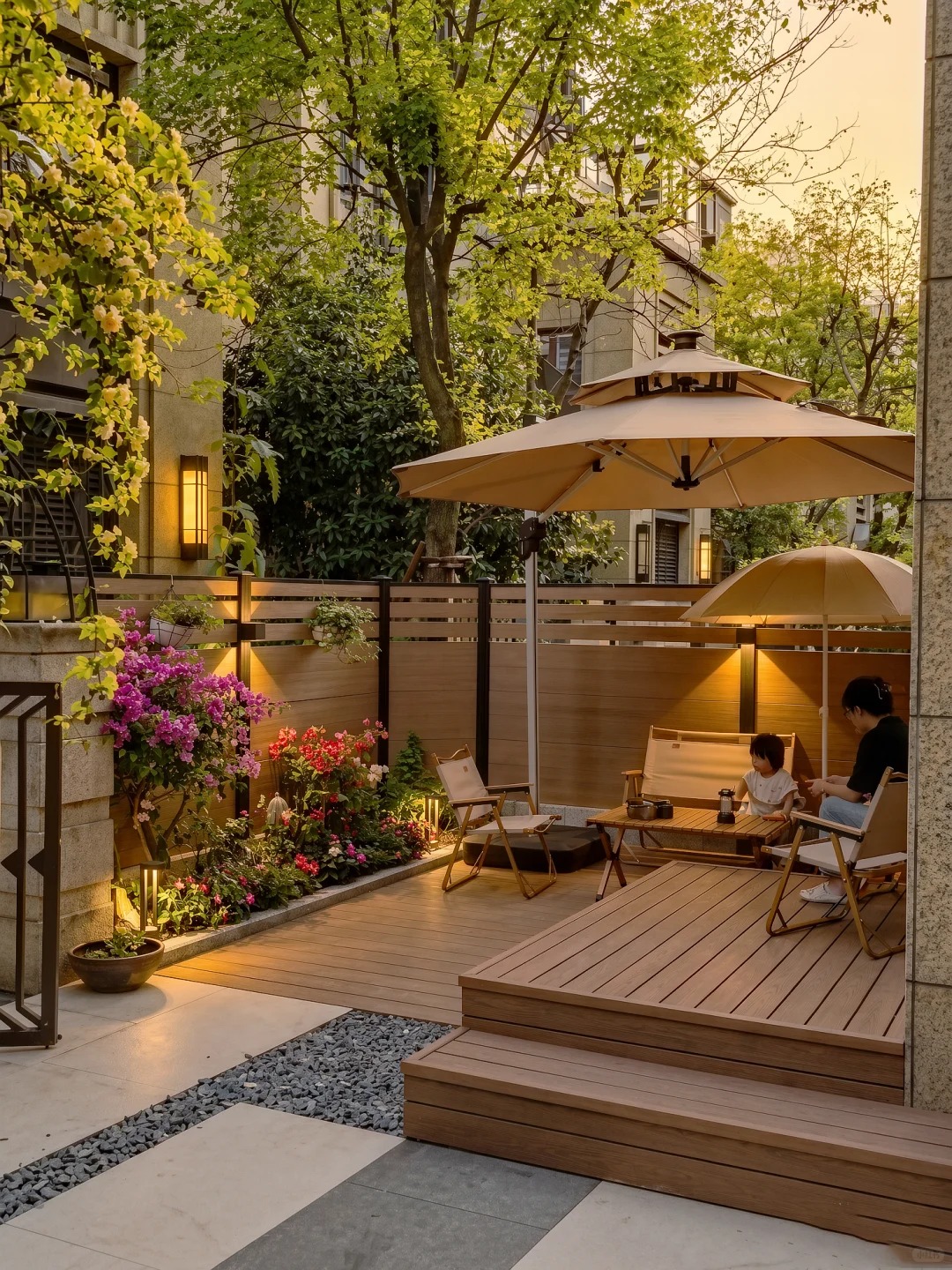
Necowood co-extruded WPC decking can be cut and shaped to follow curved or irregular layouts. Unlike tiles, which are difficult to cut without chipping, WPC boards can be cut cleanly and paired with flexible edging trim for a smooth curved finish. The material is 100% waterproof, UV-resistant, and requires zero maintenance — no sealing, staining, or sanding. This project was completed by a 3-person team in 3 days, including templating, cutting, and finishing.


Project background
This project involved a residential outdoor space with an irregular curved layout. The homeowner wanted a deck platform that would blend naturally with the garden landscape while solving recurring issues with water pooling and timber decay.
The key challenge was the shape: the space was curved and irregular. Traditional tile installation would have required extensive cutting, carried a high risk of chipping, and left visible grout lines. After evaluating multiple options, the design team selected Necowood co-extruded WPC decking as the primary material.
Why irregular spaces are difficult to deck
Irregular and curved spaces pose specific challenges for traditional materials:
- Tile cutting: Curved cuts require specialized equipment and carry a high risk of chipping. Even with wet saws, the margin for error is small.
- Grout lines: Curved tile installations require angled grout lines that are difficult to make consistent and prone to cracking.
- Timber warping: Wood decking expands and contracts with moisture, making curved installations particularly susceptible to separation and warping over time.
- Joint alignment: Maintaining consistent joint spacing on curves requires precise templating and multiple trial cuts.
WPC decking solves these problems at the material level. It cuts cleanly without chipping, does not absorb moisture, and maintains its shape across temperature changes. This makes it uniquely suited for curved and irregular installations.
Installation: cutting curves, not corners
The key to a successful curved deck is precise templating and clean cutting. The installation team used a "template first, cut second" approach — mapping the curve layout and corner positions before any cutting began.
Step 1: Survey and template
A flexible measuring tape was used to trace the curve against the existing structure. The team then created a full-scale template on kraft paper, marking every arc radius and corner angle. This step is critical — it allows any issues with the curve to be identified and corrected before material is cut.
Step 2: Cutting the WPC boards
The template lines were transferred directly to the Necowood WPC boards. The boards were cut using a circular saw with a fine-tooth blade (40-60 teeth) — producing clean, smooth edges without chipping. For tighter radius curves, the team made relief cuts on the underside of the board to allow it to follow the curve more naturally.
Step 3: Sub-structure installation
A level base frame was laid with joists spaced at 30-40cm (12-16 inches) intervals. Pressure-treated timber was used for the joists, with blocking added at all cut edge intersections. The sub-structure was carefully aligned to follow the curved layout of the decking above.
Step 4: Decking installation
The WPC boards were fixed using concealed clips, which provide a clean, fastener-free surface. For curved sections, the boards were cut to fit the curve and secured with stainless steel screws (grade 316 for added corrosion resistance). The screw heads were countersunk and covered with matching trim plugs.
Step 5: Edge finishing
For the curved edge, the team used flexible edging trim made from the same material. The trim was heated with a heat gun to 60-80°C (140-176°F), allowing it to bend smoothly along the curve. It was fixed with screws at 15-20cm (6-8 inch) intervals, creating a seamless, professional edge that follows the natural line of the space.
Why Necowood WPC was the right choice
Technical specifications
What the homeowner says
"I was worried a curved deck would look awkward or unfinished. But the WPC turned out beautifully — the lines are smooth and natural, and it blends perfectly with the garden. The best part is the maintenance. I don't have to oil it, seal it, or worry about rot. Rain just washes off, and leaves brush away with a quick rinse."
"I've had timber decks before and they always needed attention. This one doesn't. I wish I'd known about WPC years ago."
— Homeowner, 3 months after installation
Following the success of the deck platform, the homeowner extended Necowood WPC to the garden seating and planter borders, achieving a unified outdoor aesthetic across the entire space.
Key design considerations for curved WPC decks
Key takeaways
- WPC is the preferred material for curved installations. It cuts cleanly without chipping, does not absorb moisture, and maintains dimensional stability across temperature changes.
- Templating is non-negotiable. Full-scale templating before cutting prevents errors and reduces material waste by up to 30%.
- Zero maintenance is a real benefit. No sealing, staining, or sanding means the deck stays looking new with minimal effort.
- Design freedom expands possibilities. Irregular spaces no longer limit design options — WPC can follow any curve or layout.
- Plan for expansion and contraction. WPC moves with temperature changes, so correct gap spacing and fastener selection are essential for long-term performance.
Frequently Asked Questions
Ready to transform your irregular outdoor space with a curved WPC deck?
Necowood co-extruded WPC decking — weather-resistant, zero maintenance, and design-flexible.
Suitable for patios, terraces, gardens, and pool surrounds.